
Zimbabwe Health & Vaccinations
Malaria and Yellow Fever
Zimbabwe Health Information
Health care services in Zimbabwe are few and not of good quality, and in the rare case of an emergency, travellers are usually evacuated to South Africa, where facilities are excellent. It is therefore imperative that you be prepared with all the necessary medications you may need during your travels. Make sure you have the latest safety tips from the establishment where you will be staying, and take common sense precautions as you would when travelling elsewhere. Avoid drinking tap water that has not been boiled or disinfected, eating produce that has not been peeled or cooked, and eating food from street vendors. Drink lots of water to avoid heat exhaustion or heat stroke, and make sure to always use insect repellent to avoid contracting insect-borne diseases.
As always, when travelling to any destination, please be sure you are up to date with all routine vaccinations. Commonly recommended vaccinations for travel to Africa include the following: Tetanus, Diphtheria, Polio, Typhoid, Hepatitis A, Hepatitis B, Yellow Fever, Rabies, and Meningitis. Visit your doctor several weeks before your trip to ensure that you have all the vaccines and medications you need.
Malaria Recommendations for Zimbabwe
Zimbabwe as a whole lies in a moderate-risk zone for malaria, with peak season being from November to June in all areas below 1200 m and year-round risk in the Zambezi Valley. Risk in the cities of Harare and Buluwayo is slight. Therefore, it is recommended you consult your doctor to see whether you should take malaria prophylaxis before entering Zimbabwe. Which tablets you take, and when you start and stop them, depends entirely on the drug your doctor prescribes — the schedules differ significantly between them, so ask a travel clinic rather than following a general rule.
Other prevention methods such as using mosquito repellent and sleeping under a mosquito net are also recommended.
Yellow Fever Vaccination Requirements for Zimbabwe
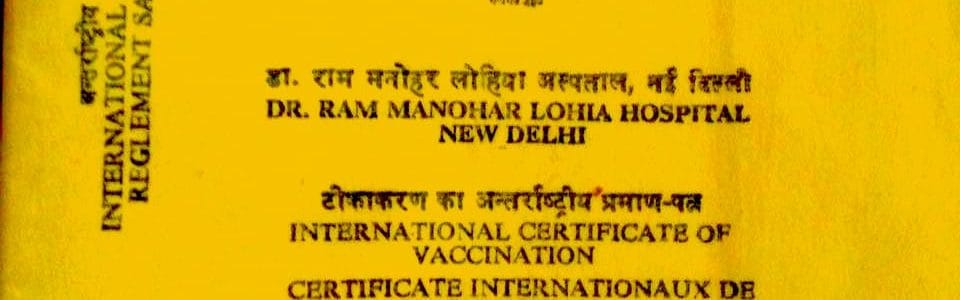
Zimbabwe requires a valid yellow fever certificate from all foreign visitors and citizens over 1 year of age travelling from an infected area or having been in transit through infected areas (>12 hours). This rule applies to travellers from the following countries: Angola, Argentina, Benin, Bolivia, Brazil, Burkina Faso, Burundi, Cameroon, Central African Republic, Chad, Colombia, Congo, Côte dʼIvoire, Democratic Republic of the Congo, Ecuador, Equatorial Guinea, Ethiopia, French Guiana, Gabon, Gambia, Ghana, Guinea, Guinea-Bissau, Guyana, Kenya, Liberia, Mali, Mauritania, Niger, Nigeria, Panama, Paraguay, Peru, Rwanda, Senegal, Sierra Leone, Sudan, South Sudan, Suriname, Togo, Trinidad and Tobago, Uganda, and Venezuela.
Yellow Fever Vaccination Requirements for US Citizens
Health recommendation: There is no risk of yellow fever in Zimbabwe. The government of Zimbabwe requires proof of yellow fever vaccination only if you are arriving from a country with risk of yellow fever. This does not include the US.
More details at:
Yellow Fever Vaccination Requirements for Indian Citizens
Citizens from India who are directly travelling to Zimbabwe and back do not require the yellow fever vaccination certificate.
More details at:
- https://mohfw.gov.in/media/disease-alerts/yellow-fever
- https://www.chaloafrica.com/diary/yellow-fever-vaccination-requirements-from-india/
Choosing between countries?
If Zimbabwe is still one of several options, our guide to African safari destinations compares every country we work in side by side, including malaria status, the best months to visit, typical trip lengths and starting prices.
Zimbabwe health and vaccinations: common questions
Do I need a yellow fever certificate to enter Zimbabwe?
Only if you are arriving from a country with risk of yellow fever transmission, from age one. Zimbabwe is not itself a risk country, and the World Health Organization does not recommend the vaccine for itineraries limited to Harare and Bulawayo. Under the International Health Regulations the yellow fever certificate has been valid for life since 11 July 2016, and that applies retrospectively to certificates issued before then. No country may demand a booster as a condition of entry. The certificate becomes valid on the tenth day after vaccination. A Nairobi or Addis Ababa connection en route to Harare or Victoria Falls is what usually triggers the requirement.
Is there malaria in Zimbabwe?
It varies by altitude and season more than most people expect. Below 1,200 metres the risk is high from November to June and low for the rest of the year. In the Zambezi valley — which covers Mana Pools and the Victoria Falls corridor — the risk runs year-round. Harare and Bulawayo are very low risk. Hwange is seasonal. That variation is exactly why prophylaxis is a travel-clinic conversation rather than a general rule, and we do not administer or arrange it.
Is there a sleeping sickness risk?
CDC currently carries a travel notice for East African sleeping sickness naming Zimbabwe alongside Zambia. It is spread by tsetse fly, progresses quickly and requires treatment. Wear medium-weight, neutral-coloured long sleeves and trousers in tsetse country, inspect vehicles before getting in, and avoid resting in bushes. Repellents do not work against tsetse — the clothing is the defence.
What else should I know about health in Zimbabwe?
Schistosomiasis is present in the Zambezi and Lake Kariba, so treat fresh water with caution regardless of local reassurance. Rabies is worth discussing for longer trips. Water and sanitation problems drive periodic cholera outbreaks, which is a reason to check current notices close to departure. A clinic will typically cover hepatitis A, typhoid, tetanus, diphtheria, polio and MMR.
When is the best time to go, once the health side is sorted?
August to October, peaking in October, when Hwange’s pumped waterholes concentrate elephant in the hundreds and Mana Pools is at its best. That is also the lower-malaria window below 1,200 metres, which is a useful alignment. Victoria Falls is a separate calculation — peak flow and best view are opposite things there. Our guide to the best time to visit Zimbabwe sets out both.