

Close your eyes, are they closed? Now pay close attention to my voice.
Let me take control of your imagination just for a few minutes.
But I promise you this short period of time will change you forever.
Let’s wrap something carefully around your waist – it is simply a piece of identity.
A chitenge: a sign of womanhood and respect, my daughter.
Take a seat my son.
Let us sit together on the reed mat, “impassa” as we call it in Bemba.
Let me take you on a journey.

What is family? To a Zambian it is more than just a group of people that share a common relation be it by blood or adoption or friendship.
It is more than just a mother, father and children. In Zambia the definition of an isolated nuclear family is traditionally foreign.
A parent isn’t just someone whom you are biologically related to. It is any elder in the community.
You are now but a child and your friend has offended you, you hit her, she bursts out crying.
You think you are safe because your mother is not around but oh child you are mistaken.
A sharp pain greets your ear, you cry out and look at the source of your discomfort, it is your next door neighbour Bana (Bana; meaning wife of or mother to) Mwamba.
It is not a shock to you for in Zambian culture a child is raised by the community not just by his or her parents.
If your next door neighbour or the man who sells vegetables on the street corner sees you misbehaving, oh say your prayers for you will not escape discipline.
You are forced to apologise to your friend but your punishment doesn’t end there.
Bana Mwamba drags you by the ear, straight to your mother.
You think your mother will defend you, lash out and scold your next door neighbour for interfering in a matter as personal as disciplining her child but alas she smiles and asks what you had done.
Once Bana Mwamba is done explaining, your mother gives her a bunch of vegetables to show her gratitude.
In Zambia, discipline of a child isn’t just reserved for the parents, it is the responsibility of the community for it takes a village to raise a child.
In traditional Zambian communities, even an orphan is destined to grow into a disciplined adult.
Next door neighbours can even sponsor the education of an orphan for no one should be left to lack anything.
That is family!
The moment Bana Mwamba leaves, your mother is sure to take over from where she had left off in giving you a proper beating, one that would teach you to never inflict pain on others. Ironic, I know.
In your household you live with 3 of your mothers and 2 of your fathers, your grandmother and your grandfather.
Before you get confused, in your home the title of mother and father is as liquid as water for the sisters of your mother are your mothers as well and the brothers of your father are too your fathers but the sisters to your father are your aunts. Kinship in your home stretches further than blood alone -hold onto that, because it changes everything else you’ll learn here.
You have 3 brothers and seven sisters but only one of your brothers shared a womb with you.
In your home, now that you are a Zambian, even your cousins are your brothers and sisters.
And you all live under one roof, helping one another as a unit.
Another shift!
You wake up one morning, you brush your teeth and prepare yourself for work that day but your wife receives a call, her younger cousin is on his way to your residence.
This doesn’t shock you, it is a common occurrence in a Zambian household. One that you experienced when growing up for you also were raised by your father’s brother.
He had taken you in after your father had passed away, educated you and treated you as his own.
His children were your brothers and sisters, you never felt secluded in any way. From the outside you were their biological child, at least that’s what the neighbours knew.
And you father’s brother did not correct them; he actually preferred it that way and he forbade his children to say otherwise.
Now it’s your turn to take on that responsibility because your wife has not been able to have children of your own and your wife’s sister is struggling to make ends meet and take proper care of her son.
But your wife carries the burden of her sister and treats it as a blessing for now she has been granted the opportunity she has long awaited, to finally be a mother.
That is simply the way of life in Zambia.
Child fostering is a common phenomenon among many households. If a sibling is facing financial hardships or a couple cannot have children, children are often circulated to live with aunts, uncles and grandparents and they are not treated any differently from the biological offspring of the household.
That is family!
Do not open your eyes just yet, we are shifting perspectives.
You are now an uncle but not just any uncle you are the maternal uncle, the most significant family member amongst many tribes in Zambia.
You are Bemba by tribe and your title comes with great responsibility for no decisions regarding the family come to pass unless you approve of them and you are responsible for the guardianship of all the children.
Most Zambian tribes bend towards matrilineal kinship. Inheritance, lineage and ancestral ties are traced through the mother’s side of the family
But patrilineal and matrilineal kinship coexists in Zambia as tribes such as the Ngoni and Namwanga of eastern province trace their inheritance, lineage and ancestral ties through the father’s side of the family.
Your perspective shifts again.
You are to marry in the next six months, your groom and his uncles arrive. Your family welcomes them but they cannot see you just yet.
One of his uncles say, “we have seen a hen here.”
Your parents look at each other and they bring you out but you cannot see, you are covered in a chitenge and you are made to sit on the ground.
Seated all around you are your maternal uncles and the uncles of your husband to be.
The chitenge is slowly removed, revealing a beautiful young lady.
You are uncovered and your groom is asked, “is this the hen you are looking for?” he agrees.
You are also asked “do you know this man?”
You nod your head shyly and agree in a low voice “I do.”
This is but the beginning of your lobola negotiations. For many hours your uncles will make known your value to your groom’s family; are you educated, did you go to university, are you a virgin, are you well behaved? All these things will determine how much money your groom has to give your parents in order to be given the chance of being your husband.
One rule is in favour of his family, no price is final. It’s called a negotiation for a reason.
Your family will deliberately put an extremely high price on the table just to test the financial stability of your husband but this price is always negotiable.
Factors like the income and financial background of your husband to be are taken into consideration and more often than not the price is lowered but not to enough to leave your groom stress free.
Lobola is an often misunderstood custom, mistaken for selling a bride to her bridegroom but instead it is a way of properly appreciating her parents and cementing a social alliance.
It also acts as a makeshift compensation for the loss of a child, for she will no longer live with her parents but with her husband.
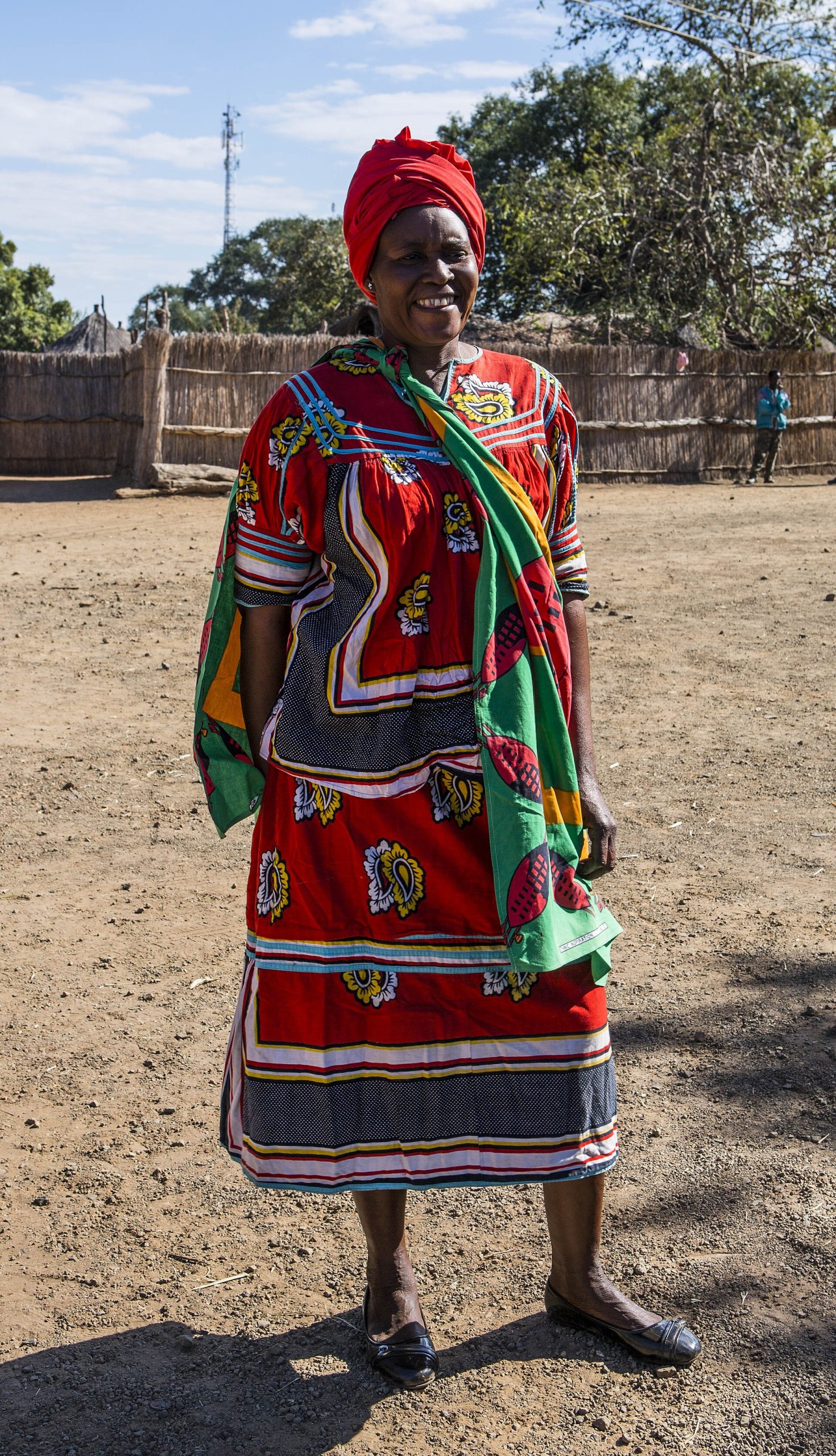
The city is now pulling at these old certainties. In Lusaka and the Copperbelt, families are shrinking to fit smaller homes and smaller budgets, and the wide many-roomed household of your childhood is becoming harder to hold together.
Families now favour nuclearization for extended families that are now too expensive to sustain.
The increasingly common migration to urban areas such as the Copperbelt and Lusaka provinces of Zambia have led to overpopulation making the sustainability of larger families more difficult.
Though traditionally a man is said to be the head of the house but you have defied the odds, as an established lawyer and breadwinner of the family, you and your husband make decisions as a team and more often than not you have the upper hand. You earn more than he does. Completely against the norm.
But this is now a daily custom in modern day Zambia. With more women entering both formal and informal employment and workforces, it has granted them a stronger voice in decision making.
Open your eyes now. Take off your chitenge.
What you have just felt – the ear pinched by a neighbor, the uncle who approves your marriage, the cousin who arrives unannounced and is fed without question.
That my child is the real architecture of a Zambian family.
It does not always hold everyone equally, and modern life is testing it in new ways.
But at its best, it is one of the warmest systems of belonging you will ever be welcomed into.
About the Author

Grace — Grace is a Zambian writer and poet specializing in cultural storytelling across Southern Africa. Currently pursuing her studies in India through the Edoofa Scholarship Programme, she brings a reflective, deeply observant voice to her travel writing, shaped by years of turning everyday moments into poetry. Her work moves between the descriptive and the personal, finding meaning in landscapes the way others find it in verse. Grace writes with quiet determination and an eye for detail, helping readers feel a destination’s spirit, not just see its scenery, through prose that lingers a little longer than expected.
Cover image: Women drawing water from the well in a Zambian village. Photo: Hanay, CC BY-SA 4.0, via Wikimedia Commons.