

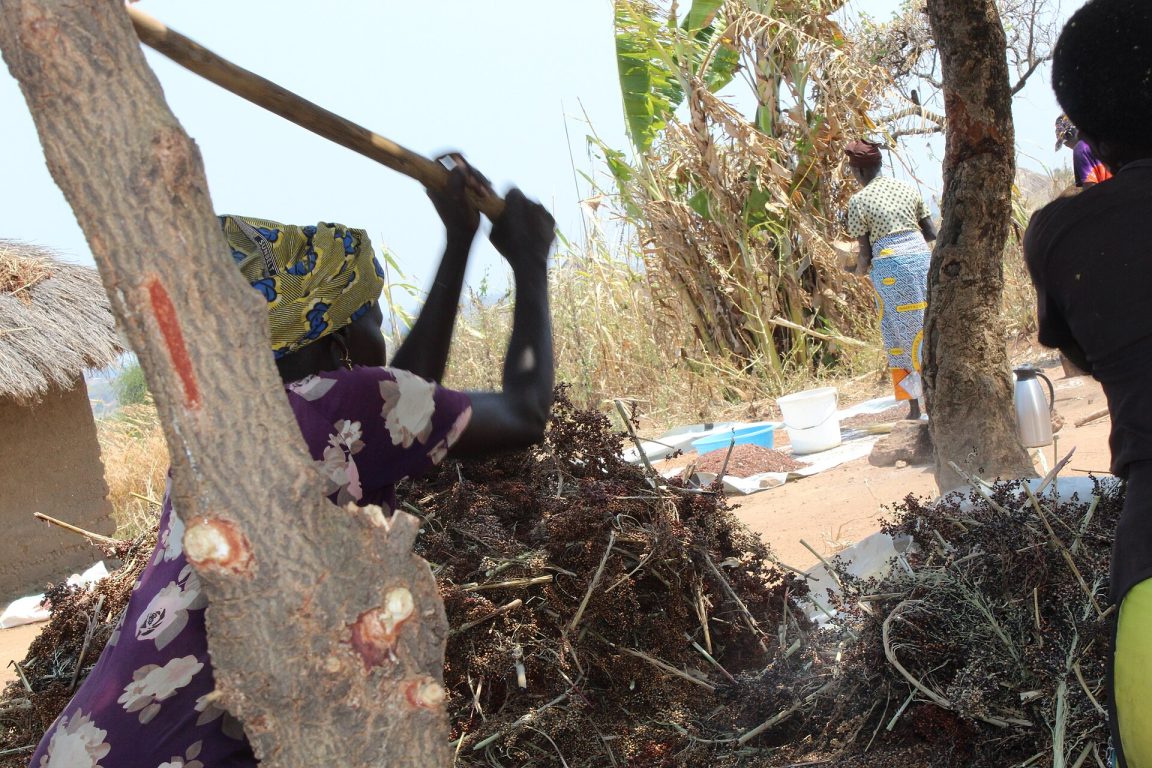
Before the first rays of sunlight reach the Kalahari, the steady thud of wooden pestles already echoes across the village. Beneath a camel thorn tree, a blackened three-legged cast-iron pot hangs above glowing mopane embers, where beef has been simmering since before dawn. Smoke drifts lazily into the cool morning air while women pound sorghum into flour, pausing only to exchange quiet laughter before returning to their rhythm. There are no timers, no written recipes, and no rush. The meat will soften when it is ready. The porridge will reveal its texture through practiced hands alone. In Botswana, the finest meals are measured not by speed but by patience.
That quiet rhythm has shaped Botswana’s cuisine for centuries. In a country where the Kalahari Desert covers nearly seventy percent of the land, rainfall is unpredictable and fertile farmland is limited. Food was never shaped by abundance but by ingenuity. Every grain of sorghum, every bowl of fermented milk, and every cut of beef tells the story of people who learned to thrive in one of Southern Africa’s most demanding landscapes. To understand Botswana is to understand the slow smoke rising from a village fire, the careful preparation of food that cannot be hurried, and the generosity of a meal shared with family, neighbours, and strangers alike.
No crop reflects that resilience better than sorghum. Long before imported wheat, rice, and maize became widely available, sorghum stood firm against droughts that destroyed less hardy crops. Even today it remains one of Botswana’s most important traditional grains, valued not only for its ability to withstand harsh conditions but also for the nourishment it provides.
The grain is transformed into bogobe, the thick porridge that forms the foundation of daily life across much of Botswana. Unlike soft breakfast porridges, bogobe demands strength and concentration. Sorghum flour is gradually stirred into boiling water using a long wooden paddle, and the mixture must be worked continuously until every lump disappears and the texture becomes smooth yet dense enough to satisfy a family after hours of work in the fields or at the cattle posts. In many homes, children learn the movement simply by watching parents and grandparents, inheriting techniques that have never been written down but are passed from one pair of hands to the next.
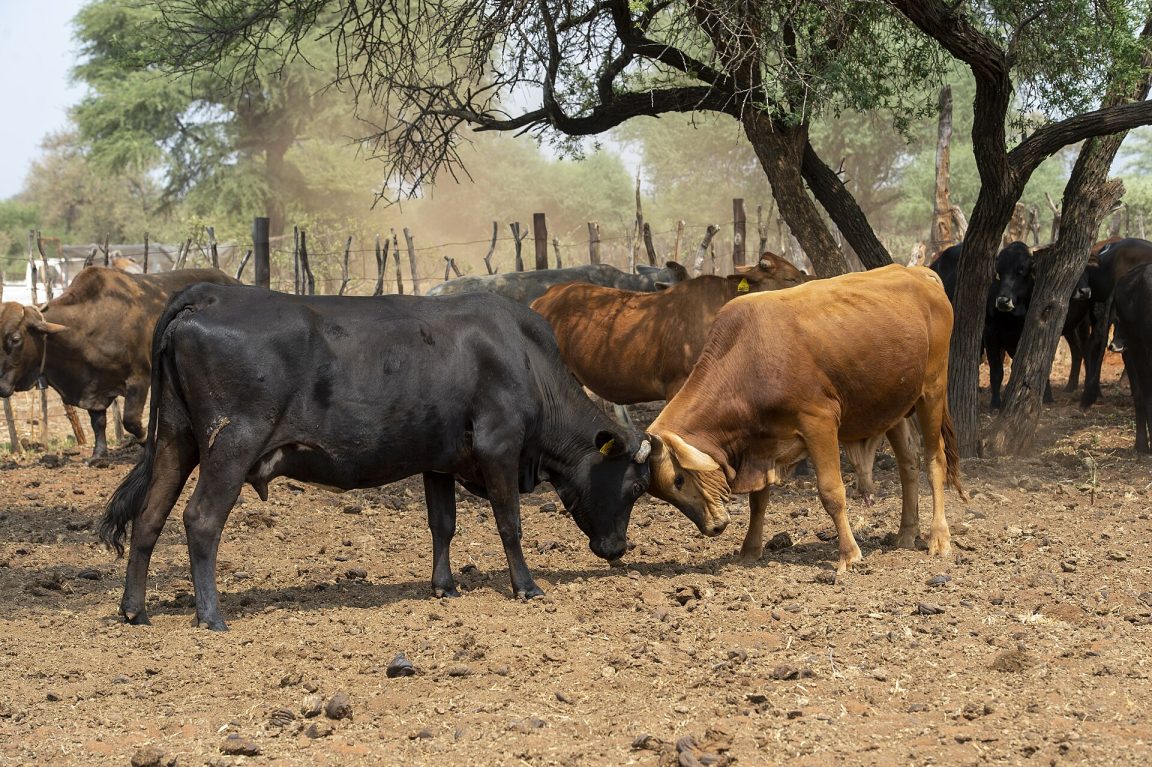
If sorghum represents Botswana’s fields, cattle represent its soul.
For generations, the wealth of a family has often been measured by the size and health of its herd. Cattle provide far more than meat. They symbolise prosperity, social standing, marriage, and continuity between generations. This enduring pastoral culture explains why beef occupies a place unlike anywhere else in Southern Africa and why Botswana has earned an international reputation for producing high-quality beef.
At the centre of that tradition is seswaa, Botswana’s national dish. At first glance it seems remarkably simple: beef is slowly boiled with little more than water and salt. Yet simplicity is precisely its strength. Seswaa is not everyday food prepared in haste. It is the meal reserved for weddings, funerals, dikgafela (traditional celebrations), initiation ceremonies, and national gatherings where families and entire communities come together.
Preparing seswaa is as important as eating it. Large iron pots simmer gently over wood fires for hours, sometimes from sunrise until late afternoon, while elders supervise the cooking, judging the meat by experience rather than by the clock. Once it has become tender enough to fall apart, it is lifted into large carved wooden mortars and pounded with heavy pestles until the fibres separate naturally. The rhythmic sound of wood striking wood echoes through the homestead as several people work together, transforming what could be an ordinary cooking process into a communal ritual. When the meat is finally returned to its rich cooking juices, it emerges soft, deeply flavoured, and ready to be shared.
Nothing about seswaa is individual. It is prepared collectively, served generously, and eaten together, reflecting values that have long shaped Botswana’s society. A guest offered seswaa is not simply being fed but welcomed into the community itself.
Milk holds an equally important place in Botswana’s culinary heritage. Long before refrigeration, families learned to preserve fresh cow’s milk through natural fermentation, producing madila, a thick, tangy dairy food that remains a staple across the country. Traditionally, fresh milk is left to sour in a calabash or enamel container for several days until it develops its distinctive flavour and creamy texture. It is enjoyed on its own, poured over bogobe, or served alongside meat, offering both nourishment and a taste that many Batswana associate with home.
The landscape itself decides what else appears on the table. When the rains finally arrive after months of dry weather, the Kalahari seems to awaken almost overnight. Families head into the bush to gather foods that cannot be cultivated but must be found through generations of ecological knowledge. Among the most prized is the morama bean, a hardy plant whose deep roots anchor it beneath the Kalahari sands. Rich in protein and healthy oils, its roasted seeds have a flavour often compared to peanuts or cashews and have sustained communities living in some of the region’s harshest environments for centuries.
The rainy season also brings wild melons, berries, edible tubers, and indigenous fruits that appear only briefly before disappearing again beneath the relentless African sun. Knowing when and where to find them is knowledge inherited from parents and grandparents, making every successful harvest a continuation of traditions that long predate written history.
Vegetables tell the same story of adaptation. Pumpkin leaves, cowpea leaves, spinach, and a variety of indigenous leafy greens are gently cooked into savoury relishes that accompany bogobe or seswaa. Rather than relying on elaborate spice blends, Botswana’s cooking allows the natural flavour of fresh ingredients to take centre stage. A little salt, onions, and tomatoes are often all that is needed because authenticity has always mattered more than complexity.
Another defining feature of Botswana’s cuisine is its enduring relationship with fire. Across rural villages, blackened cast-iron pots seasoned by decades of smoke are treasured family possessions, passed from one generation to the next. Mopane and acacia wood burn slowly, allowing meat to soften naturally while grains absorb moisture over several unhurried hours. Cooking is rarely rushed. Time itself becomes one of the most important ingredients.
That patience extends beyond the cooking into the meal itself. Families gather around large serving platters, sharing food from the same dish rather than eating separately. Elders are traditionally served first as a sign of respect, while honoured guests receive the choicest cuts of meat, gestures that quietly reinforce values of hospitality, kinship, and community. Around the meal, stories are exchanged, children listen, and traditions are carried forward as naturally as the food itself.
Modern Botswana has embraced the changing tastes of the world. In Gaborone, Francistown, and other growing towns, restaurants serve pizzas, fried chicken, burgers, and dishes inspired by cuisines from across the globe. Supermarket shelves now carry ingredients that earlier generations would never have imagined. Yet when families gather to celebrate a wedding, honour a loved one, or mark an important milestone, it is still seswaa, bogobe, and madila that take pride of place. Some traditions have proved stronger than changing fashions.
As dusk settles over the Kalahari, the cooking fire burns low, its last embers glowing beneath the blackened pot that has simmered patiently since sunrise. The seswaa is lifted onto a large platter beside steaming bowls of bogobe and calabashes filled with cool madila. Children edge closer, elders are served first, and hands reach toward the same shared meal as conversation fades into the quiet sounds of people eating together. Beyond the circle of firelight, cattle move slowly back toward their kraals beneath a sky crowded with stars. By dawn, another fire will be lit, another pot will hang above the embers, and the familiar rhythm of wooden pestles will once again echo across the village; just as it has for generations, carrying Botswana’s story forward one shared meal at a time.
About the Author

Chansa Musonda is a Zambian writer specializing in cultural and destination travel content across Southern Africa. Studying in India under the Edoofa Scholarship Programme, she writes with the curiosity of someone always chasing the next place, the next story, and occasionally the next good restaurant. Her style is engaging and conversational, blending practical travel insight with genuine warmth for the people and places she covers. Chansa approaches every destination with an adventurer’s mindset and a good sense of humour, believing the best travel writing, like the best travel, happens with an open mind and zero fear of getting a little lost.
Cover image: Seswaa, Botswana’s national dish, served with bogobe. Photo: Kalanga, CC BY-SA 3.0, via Wikimedia Commons.