

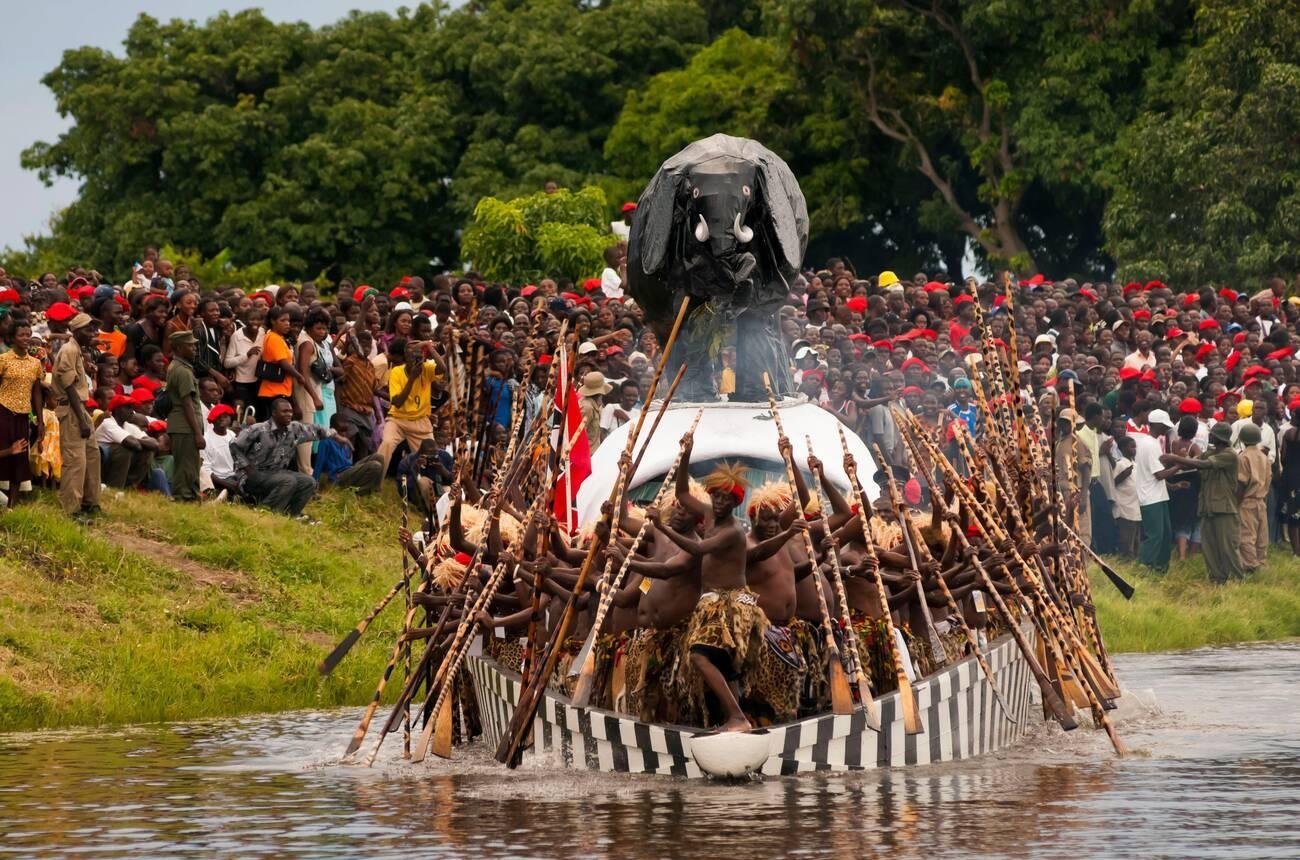
Drums begin before sunrise on the floodplain at Lealui. As the first light spreads across the Zambezi River, thousands of people gather along the banks, waiting for a familiar sight. Then, almost silently at first, Litunga‘s royal barge appears. Decorated in striking black and white patterns and propelled by paddlers moving in perfect rhythm, it carries the Lozi King from the flood-prone plains to higher ground as the waters rise. The ceremony is called Kuomboka, meaning “to move out of the water,” but it is far more than a royal journey. It is a living tradition that reminds everyone watching that culture, history, and identity are still woven into everyday life in Zambia.
While many visitors come to Zambia for its wildlife and landscapes, those who take time to experience its traditions discover another side of the country. Home to more than 70 ethnic groups, Zambia is one of Africa’s most culturally diverse nations. Communities including the Bemba, Lozi, Tonga, Ngoni, Chewa, Luvale, Kaonde, Lunda, and many others each contribute their own languages, ceremonies, music, dances, and customs. Yet despite this diversity, the country’s national motto, One Zambia, One Nation, reflects a shared commitment to peaceful coexistence and mutual respect.
That unity has deep historical roots. Centuries ago, Bantu-speaking communities settled across the region, bringing agricultural knowledge, spiritual beliefs, and social traditions that still influence life today. Powerful kingdoms later emerged, including the Lunda Empire under rulers such as Mwata Kazembe, whose systems of leadership and ceremony impressed early European visitors. Even further back, ancient rock paintings preserved at Nsalu Cave in Kasanka National Park reveal that people have expressed their beliefs and rituals here for thousands of years.
Culture in Zambia is not confined to museums or history books. It is experienced in village squares, royal courts, churches, family gatherings, and open fields where communities continue to celebrate the traditions handed down from one generation to the next. Somewhere in the country almost every month, a harvest is being blessed, a royal procession is taking place, or villagers are dancing through the night. More than twenty major traditional ceremonies are celebrated each year, alongside many smaller community events that rarely appear in guidebooks but remain deeply important to local people.
Kuomboka may be Zambia’s best-known ceremony, but it is only one expression of the country’s cultural richness. In Eastern Province, the Ngoni people celebrate N’cwala, a first-fruits ceremony that gives thanks for the harvest while honouring ancestors and reaffirming community bonds. Singing, dancing, ceremonial speeches, and traditional rituals bring people together in a celebration that connects the present with the past. Other ceremonies, including Likumbi Lya Mize among the Luvale, Kulamba of the Chewa, and Ukusefya Pa Ng’wena of the Bemba, each preserve histories, customs, and leadership traditions that continue to shape their communities today.
The same respect seen during these grand ceremonies also appears in everyday life. In Zambia, greetings are rarely rushed. Taking a moment to ask about someone’s well-being before beginning a conversation is considered a sign of respect rather than a formality. Visitors are often surprised by the warmth with which they are welcomed, whether in cities or rural communities, because hospitality is seen as an important reflection of good character.
Family lies at the centre of this way of life. Children grow up learning to respect parents, grandparents, elders, and traditional leaders, whose advice continues to carry significant weight in family and community decisions. Marriage is often viewed as the joining of two families rather than simply two individuals. Alongside Christian wedding ceremonies, many communities continue to observe customary marriage traditions that involve family negotiations, symbolic gifts, and blessings from elders.
That sense of togetherness becomes even more visible during life’s most important moments. When a child is born, relatives and neighbours often arrive with food, practical help, and congratulations before being invited. During funerals, communities gather not only to mourn but also to support the bereaved family, helping with preparations and sharing responsibilities. Joy and grief are rarely carried alone; they are shared by everyone around.
Religion also reflects this blending of tradition and modern life. Although Christianity is the country’s dominant faith, many Zambians continue to preserve traditional beliefs alongside it. Across several communities, Leza is recognised as the Supreme Creator, while ancestors are remembered as respected members of the family whose guidance and blessings remain important. Rather than seeing these beliefs as contradictory, many people have found ways for them to exist side by side.
The journey from childhood to adulthood is another area where tradition remains influential. Among communities such as the Luvale, Chokwe, and Bemba, initiation ceremonies continue to mark important stages of life. Boys may undergo circumcision alongside cultural instruction and periods of seclusion before returning as young men. Girls receive guidance on family life, responsibility, and womanhood through ceremonies led by experienced women in the community. While many of these traditions are private and not open to visitors, they remain an important way of passing knowledge, values, and identity from one generation to the next.
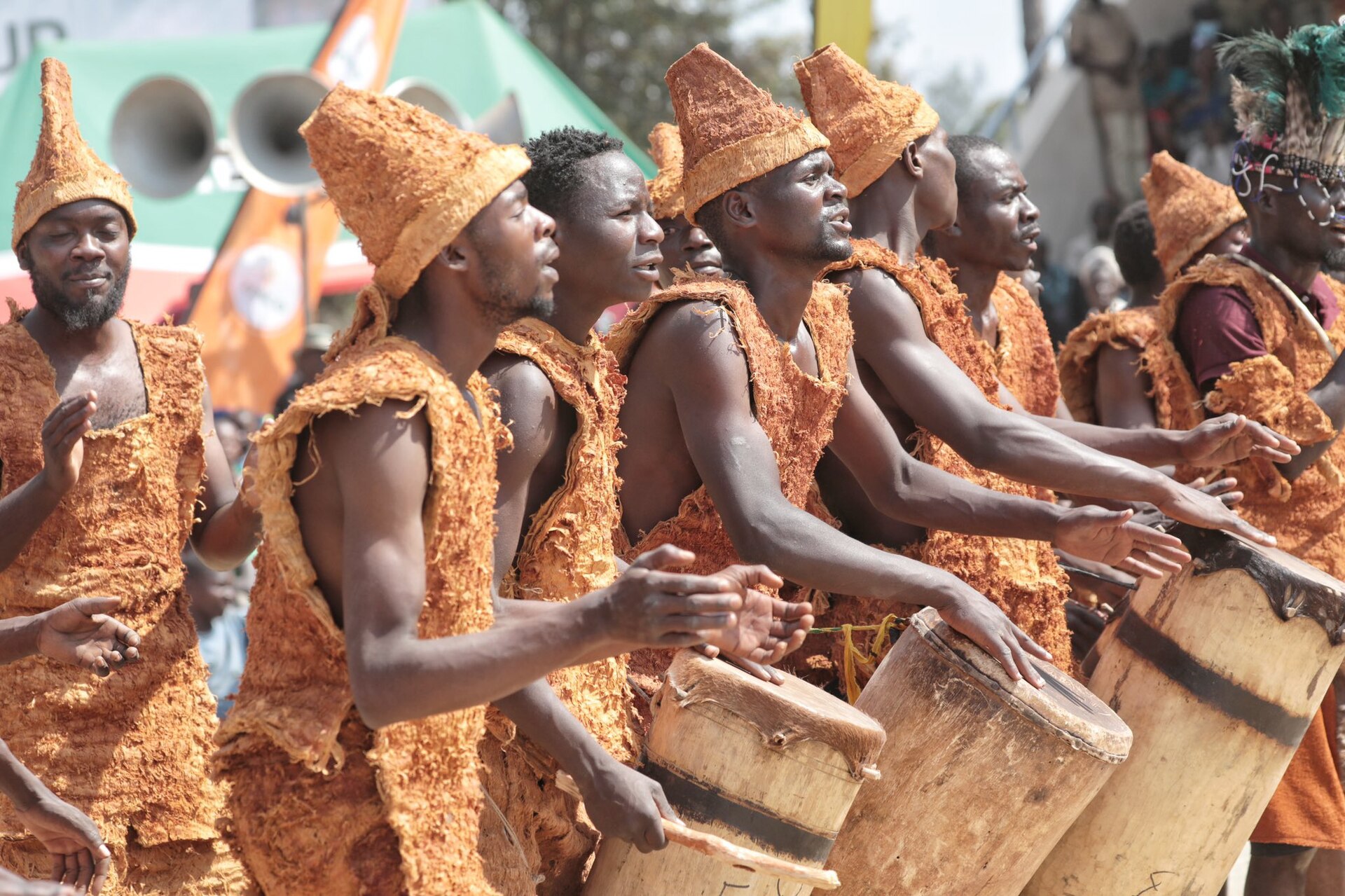
Music and dance bring these traditions vividly to life. The steady rhythm of drums, the sound of rattles and horns, colourful clothing, and energetic performances transform ceremonies into powerful expressions of history and belonging. Every movement has meaning, whether celebrating a successful harvest, welcoming a royal leader, or honouring those who came before. The Mooba Dance of the Lenje people has even been recognised by UNESCO as part of the Representative List of the Intangible Cultural Heritage of Humanity, highlighting its importance not only to Zambia but to the world.
Video: the UNESCO-inscribed Mooba dance of the Lenje people of Central Province, via UNESCO on YouTube.
Stories have always played an equally important role. Long before books became common, elders passed on history through folktales, riddles, songs, and proverbs shared around evening fires. These stories taught children how to live, explained the origins of communities, and preserved memories that written records alone could never capture.
For travellers, experiencing Zambia’s traditions requires more than simply watching from the sidelines. Greeting people respectfully, asking permission before taking photographs, dressing appropriately during ceremonies, and following local guidance all demonstrate appreciation for the communities that generously share their heritage with visitors. Respect often opens doors that curiosity alone cannot.
Long after the safari vehicles have left the national parks and the roar of Victoria Falls has faded into memory, another sound remains. It is the steady beat of drums carrying across the Zambezi floodplain as another generation gathers to celebrate traditions that refuse to disappear. That is the Zambia many travellers remember most not only for its remarkable landscapes, but for the people whose stories, ceremonies, and customs continue to give the country its soul.
About the Author

Jameel Jawabu — Jameel Jawabu is a Zimbabwean writer and Geography (Honours) student specializing in destination storytelling across Zimbabwe and Southern Africa. Currently based in India through the Edoofa Scholarship Programme, he brings a geographer’s eye for landscape and culture to every piece he writes, paired with the outsider-insider perspective of exploring the world beyond home. His writing is curious and research-driven, always chasing the “why” behind a place rather than just the “what.” A lifelong note-taker and question-asker, Jameel writes to help readers see destinations the way he does, as stories worth understanding, not just visiting.
Cover image: The Nalikwanda crosses the Barotse floodplain during the Kuomboka ceremony. Photo: Jae zambia, CC BY-SA 4.0, via Wikimedia Commons.