

I had been eager to revisit the Serengeti and the Ngorongoro Crater after having first visited more than 30 years ago, and Monica was looking forward to her first trip to the region.
We flew from Delhi through Addis Ababa on Ethiopian Airways, onward to Kilimanjaro International Airport in Arusha, Tanzania. Arusha, which had been a dusty little town 30 years ago when we first drove there from Nairobi, was now a bustling city with a large international airport as well as a second, smaller domestic one.
The nature of wildlife tourism in Tanzania had changed considerably since the 1990s. On the earlier trip, we hired a Toyota HiAce van and a driver/guide who stayed with us during the duration of our visit. We drove from camp to camp, which all seemed to be owned by the socialist government of the time. They were quite basic but comfortable. One memorable one was built upon a large kopje. In the present day, there were high quality private camps dotted around the park, each with its own fleet of Toyota Land Cruisers and teams of driver/guides.
We spent the first night at the very nice River Tree Hotel in Arusha before boarding a small plane for our flight to Lake Manyara airstrip. We were received by our guides and jeeps from Asilia’s Highlands Lodge, where we were to stay. We drove into the highlands, up a very bumpy dirt road towards the Ngorongoro Caldera’s rim, which is at 7400 feet, and then onwards to our hotel which was located at a height of over 8500 feet near the Olmoti Crater. We crossed several Masai villages with neatly laid out thatched huts on the way, as well as some Masai villagers in their vividly coloured capes. On arrival at the Highlands Lodge, we were greeted by a singing chorus of staff and were happy to settle into our rooms. The resort’s rooms and lounge were uniquely designed geodesic domes. At that height, despite being near the Equator, it got very cold at night. The rooms had a fireplace which was lit at night, but the fire would eventually go out after a few hours. The hotel promised to relight the fire at any time of the night, but it was just too cold to get out of bed and bother.
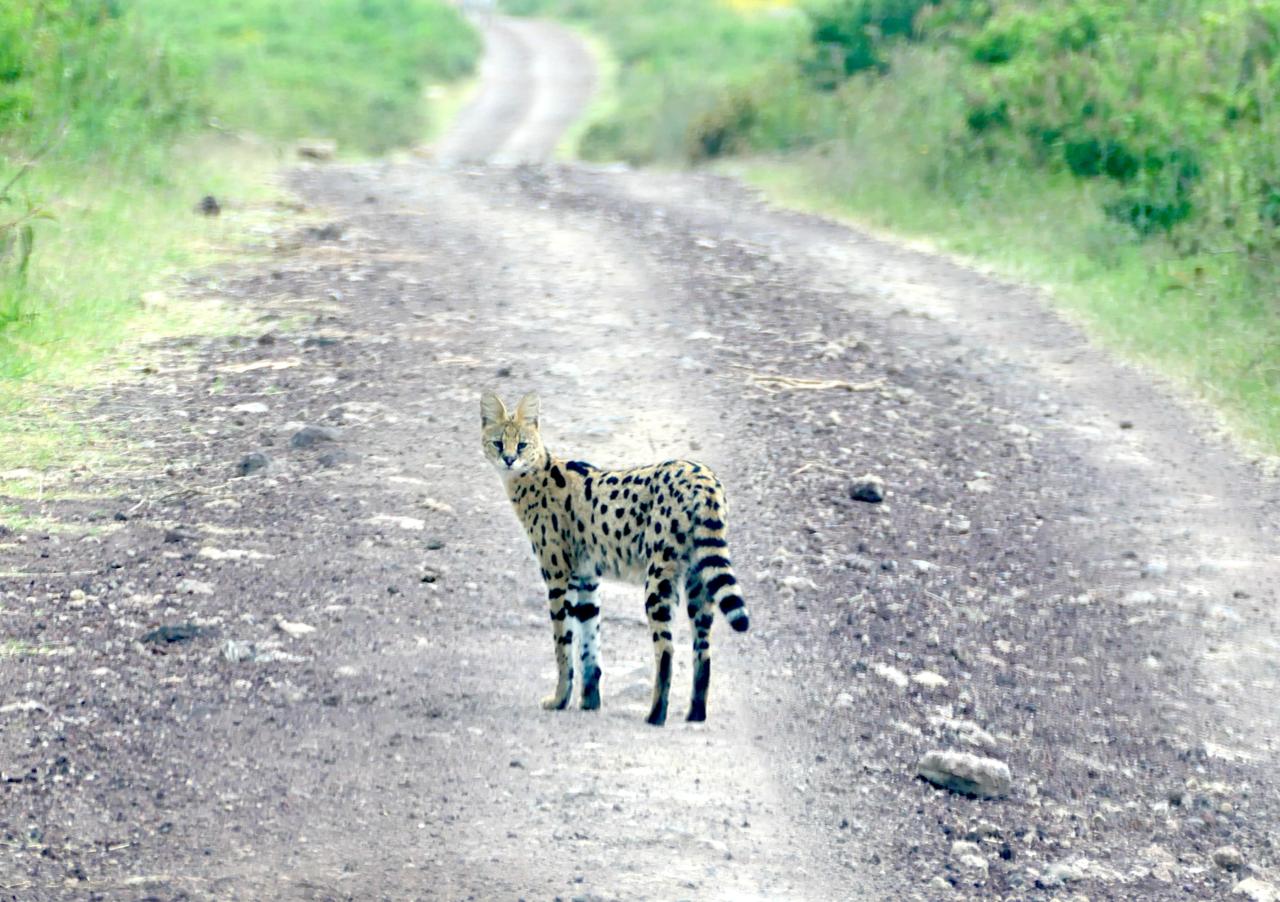
As is the norm for wildlife safaris, we headed out at dawn for the Ngorongoro entrance. The sunrise views over the highlands were spectacular as we headed out in the gathering light in a convoy of 4 Land Cruisers. We were in the lead jeep and, almost as soon as we entered the park, we saw a serval, a small jungle cat, on the track ahead of us. I scrambled to take out my camera and managed to take a few quick shots through the wind screen. It crossed the track ahead of us and disappeared into the brush. This was a relatively rare sighting, and it was a good beginning to our first game drive. It also reminded me to be ready with my camera before we enter the park.
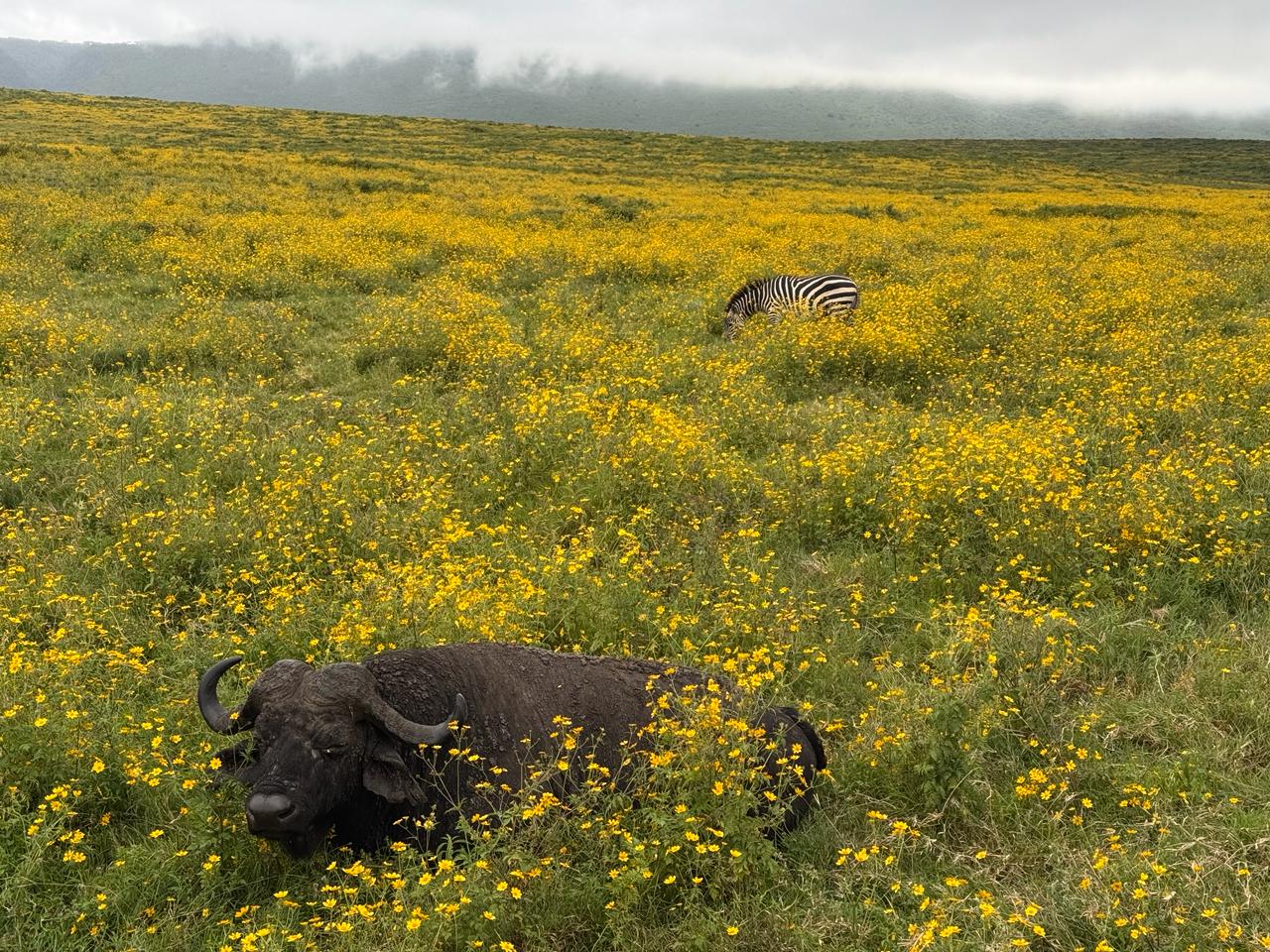
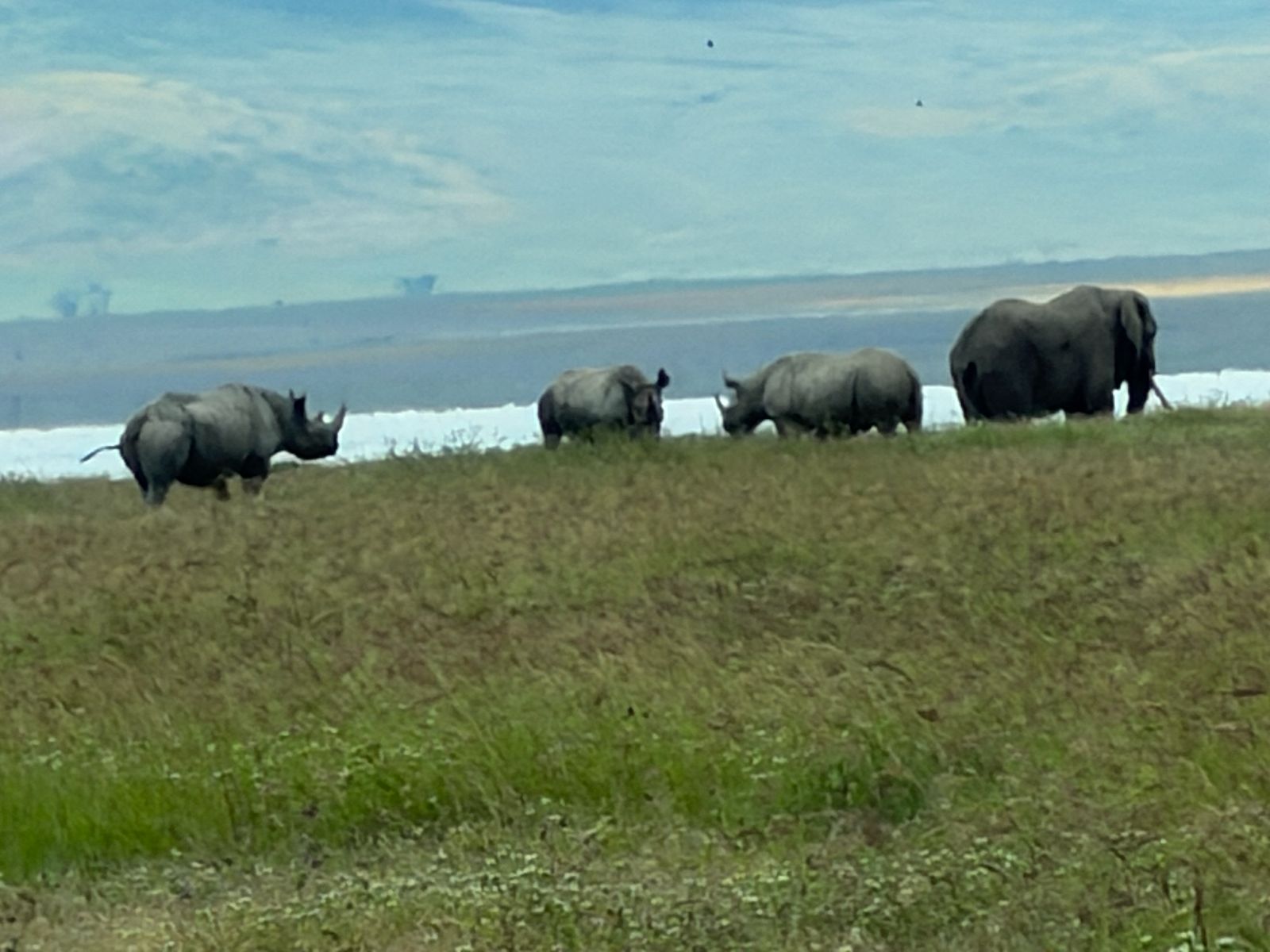
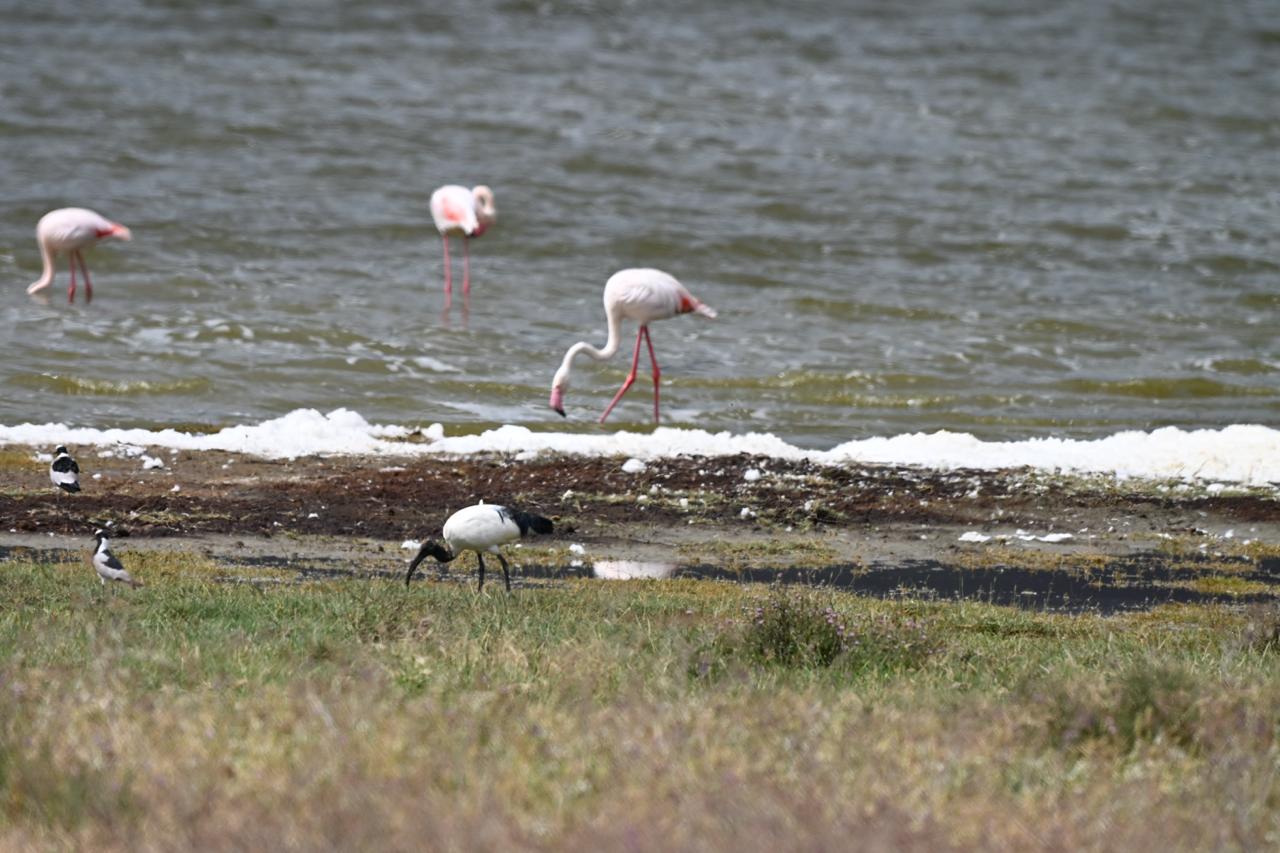
The rest of the morning proceeded pleasantly as we drove around the crater floor. The main tourist season had yet to start and there were not too many other jeeps around. The crater floor was carpeted with yellow daisy-like flowers after the rains, and they made a pleasant backdrop to our sightings of zebra, cape buffalo and elephants. We saw some young elephants playfully trunk wrestling with each other, and a young male who mock charged our jeep as he was crossing the track ahead of us. We saw some rhino in the distance, hippopotami nostril-deep in pools, and some lions lounging not far from the track. Lunch was a nice surprise. We were driven off track near a lake to a clearing in the bush where the resort had set up our table under an open sided tent for our repast.
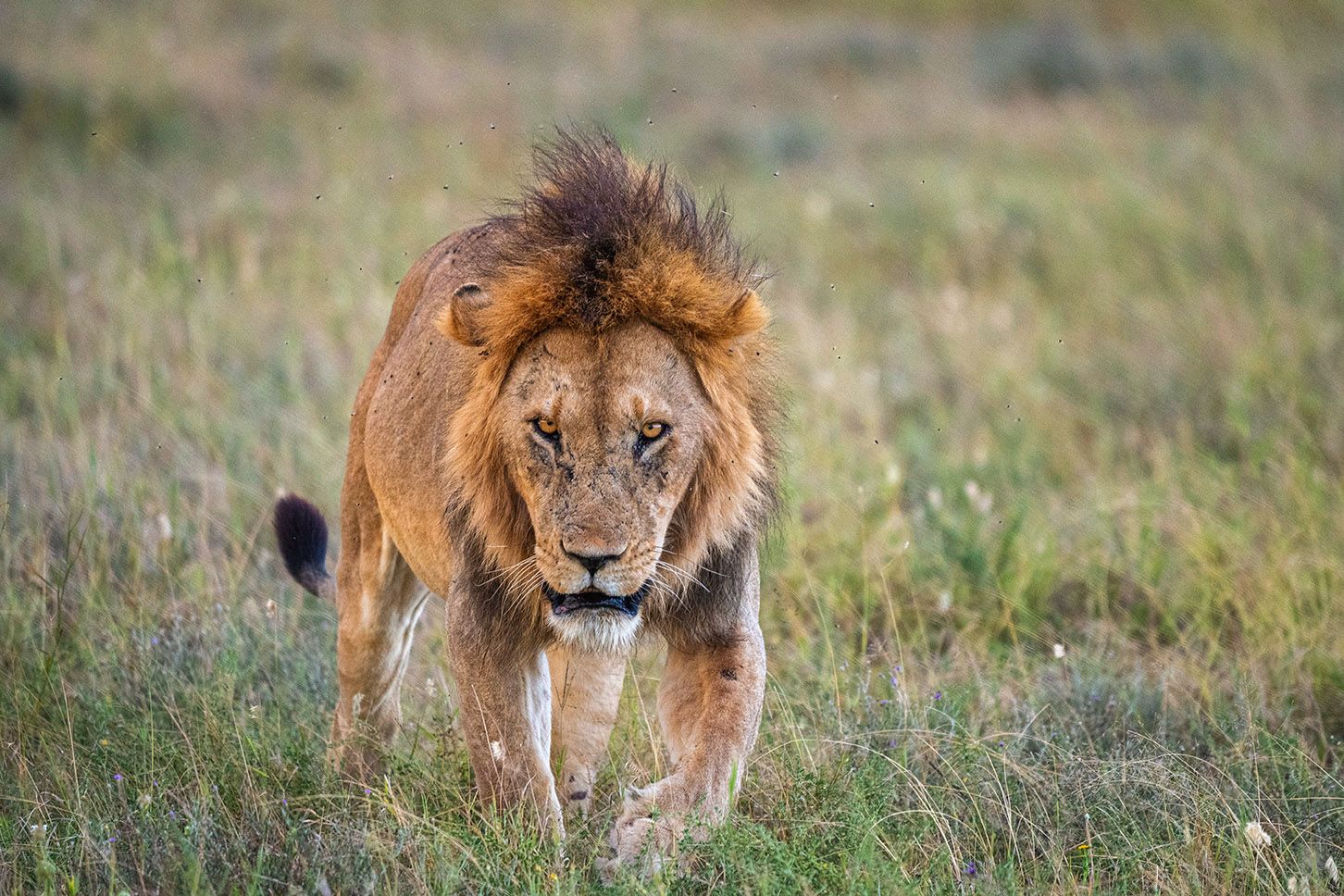
We then headed back to the plains to catch our next small plane flight to Seronera air strip in the Serengeti. Here again we were met by Asilia’s guides and vehicles, this time from their Namiri Camp. The 2½-hour drive to the camp was a game drive as we were driving through the park. On leaving the airport, we were greeted by the most unlikely and welcome sight of a lion in an acacia tree by the side of the road. As we drove closer, we were rewarded by the even more improbable sight of a total of five lions taking their midday nap up on the limbs of the same tree. What an excellent beginning to our drive!
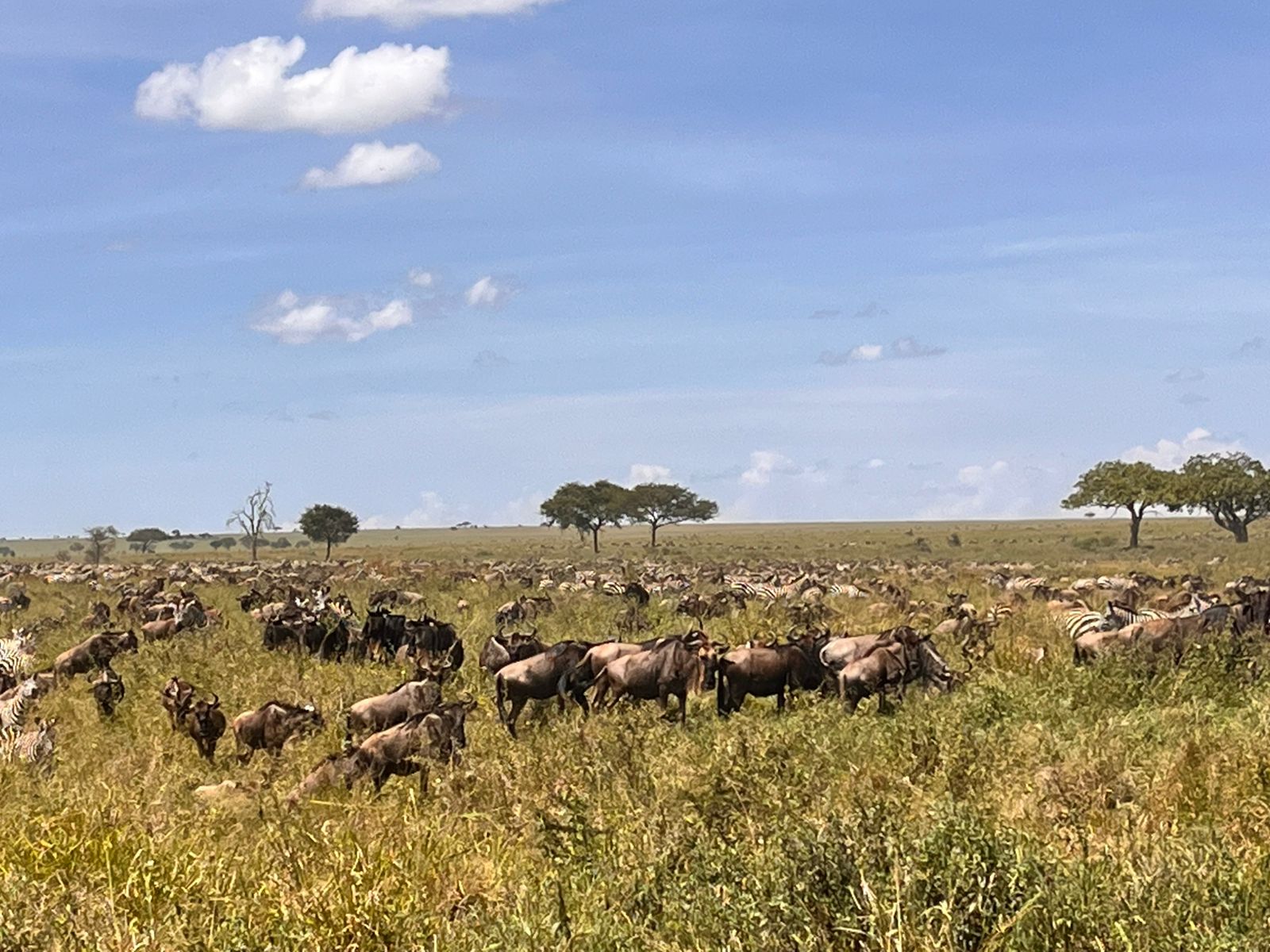
Late May is when the herds of zebra and wildebeest start congregating and preparing to make their way north to cross the Mara River as part of their annual migration in June. We intersected with several large herds of zebras and wildebeest, numbering in the thousands, as we drove along. Late May was also when the rainy season is tapering off and, on most days, we drove under cloud cover, which made it very pleasant. The big sky and wide-open spaces of the Serengeti are truly awesome. The flat grasslands are only occasionally interrupted by kopjes and acacia trees. The kopjes are like islands of rock in a sea of grass, with varied and fascinating shapes, often with fig trees growing up above the rocks. The canopied acacias look remarkable against the skyline, especially in the evening against the setting sun. With the clouds in the distance, sunsets were spectacular. We spent a lot of time driving in our search for game sightings, and the drives themselves were a treat.
Our camp was very comfortable with large rooms under canvas awnings. There was even an outdoor tub on the rear patio, which we did not get the time to use. The camp had a pool, and a spa where we were able to get a nice massage. The service staff was excellent and did their best to accommodate the varied dietary restrictions in the group. Among the 16 of us, only 3 of us had no restrictions. There was a lot of attention to detail including Nikon binoculars in the rooms, blankets and hot water bottles for the cool early morning starts, ponchos in the jeeps in case of rain, snacks to nibble on and more. Since we would leave early, a packed breakfast was carried along, and we would make a stop midmorning for some sustenance. One evening we had cocktails at a nearby kopje as the sun was setting.
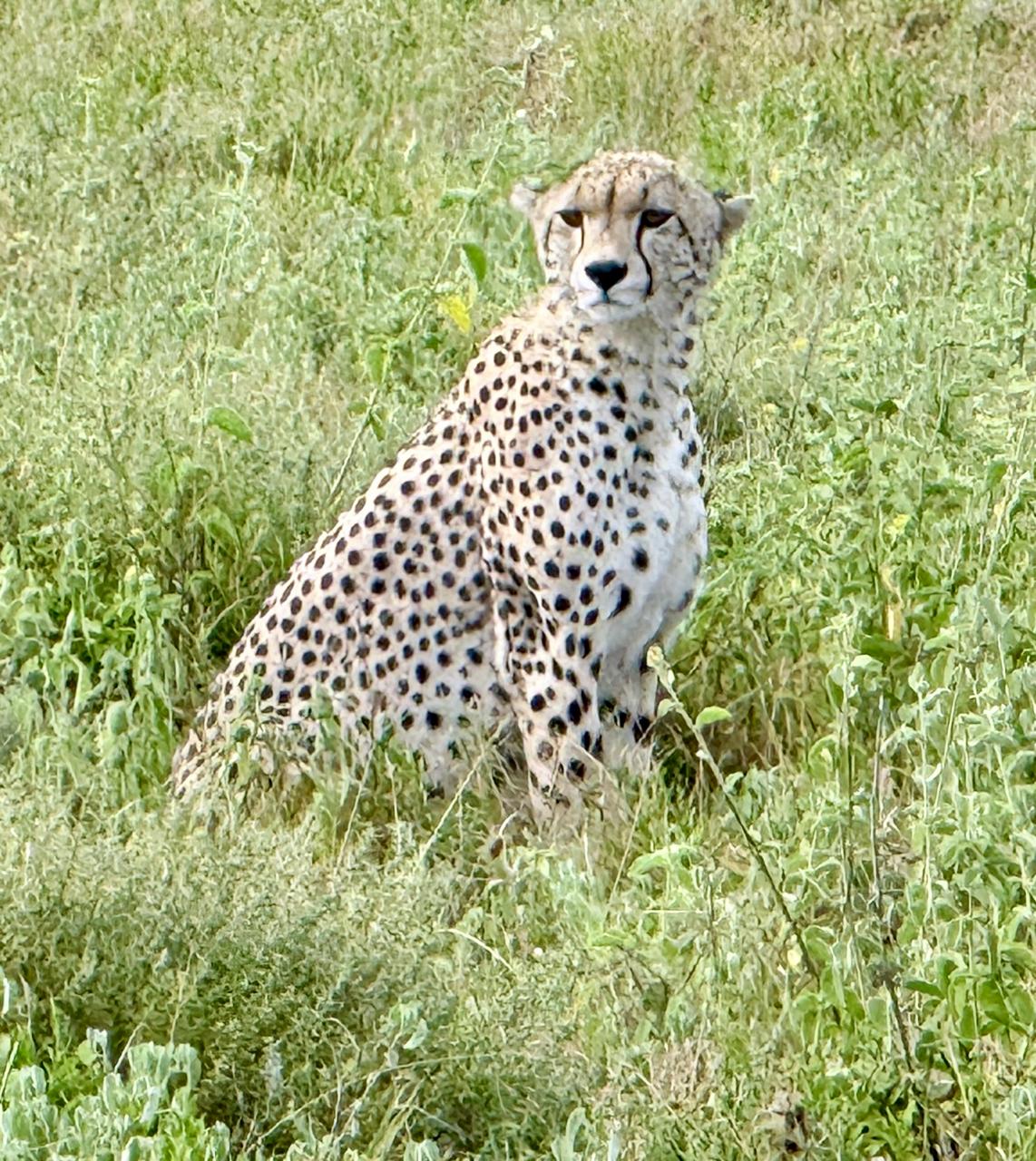
Over the next few days on our twice daily drives, there were several highlights. A mother cheetah with five little playful cubs, and her unsuccessful long chase of a young gazelle to try and feed those hungry mouths. A solitary female striding across the plain, scouring the savannah with her sharp eyes in search of her next meal. A band of three male cheetahs who chased and brought down a wildebeest. We were able to watch the initial stalking, the charge, and the take down. We drove up quite close to the kill and watched 2 of the cheetahs starting on the hindquarters of the fallen wildebeest while the third kept its jaws on the wildebeest’s windpipe until it was sure it was dead. The meal was a bit noisy as they chomped their way through, but a nervous one, as one or the other cheetah periodically stopped eating to scan the horizon to make sure there were no lions or hyenas around that would rob them of their kill.
Near our camp there was a small pride of 5 lions, 2 male and 3 female. We would see them regularly as we drove to and from the camp. They were mostly lying around sleeping or mating. Some of the mating was visible from our dining area, and one night it was uncomfortably noisy and close to our cabin.
We also saw giraffe, hyena and cape buffalo, gazelle, hartebeest and waterbuck, as well as assorted birds including raptors.
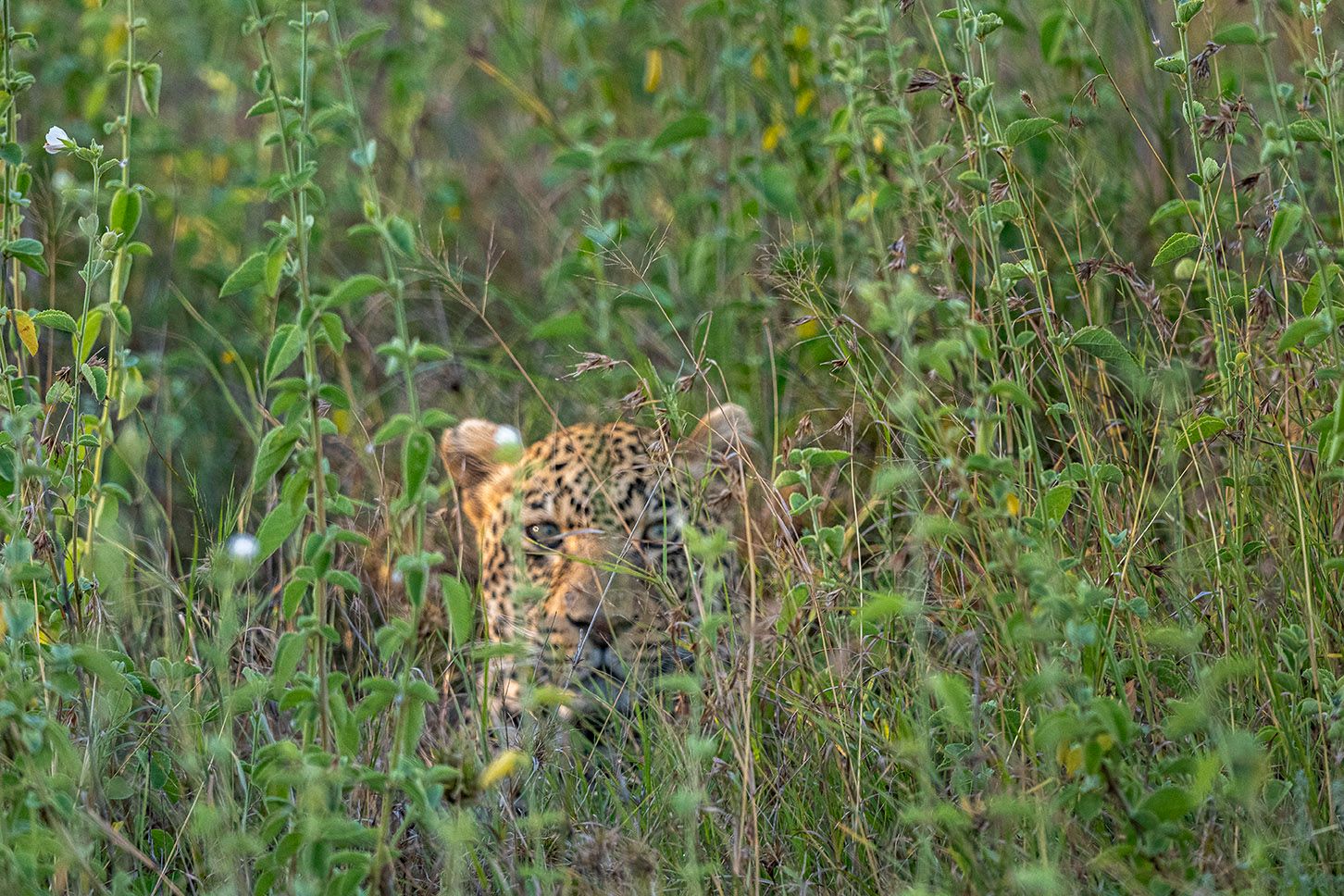
What we had not seen until our third day was a leopard, and our guides were determined to remedy that. On our final evening, we were driven to a tree where a leopard had lifted and deposited its kill, a wildebeest. It was crouched nervously in the grass near the tree, keeping an eye on the kill and hoping no other larger predator would come and rob him of his meal. We returned the next morning on our drive to the airport. The leopard and its kill were still there. The kill was now partially eaten, and the leopard was contentedly asleep on an adjoining tree limb.
Once again, the guides were excellent. We stuck with Nangeda, our young Masai guide and driver. The other drivers had lovely names like Good Luck and Innocent. The bonus on this part of the trip was that one of the Land Cruisers was specially modified for photographers. It had only 3 seats in a staggered line that could swivel 360 degrees to facilitate unobstructed shooting.
It had rained on our final night and the firm dirt tracks that we had been driving on turned into muddy quagmires. The Land Cruisers had to switch to 4-wheel drive as they slipped and slid over the mud. We made it comfortably back to Seronera airport for our final local flight to Arusha. Our take off was delayed for a few minutes as some assorted wildlife had to be shooed off the unfenced runway.
It was an exceptional and outstanding few days with great sightings, very good accommodations, excellent vehicles and guides, and very congenial company. Chalo Africa and Smita did a great job in managing everything. The visit had been timed well, as the rainy season was ending, and just before the busy season was to start, when the numbers of visitors and the rates both shoot up. The Tanzanians we encountered were a gentle people and the entire wildlife tourism industry was very well organized.