
Tanzania Safari Tours from India
Expertly planned Tanzania safaris — designed with you in India, delivered on the ground in the Serengeti, Ngorongoro Crater and Zanzibar by specialists who know both sides of the journey.
Photo · andBeyond Klein’s Camp, Serengeti National Park
The Chalo View — Why Tanzania, from India
Tanzania is where the African safari reaches its fullest expression — the endless Serengeti plains, the wildlife-dense caldera of the Ngorongoro Crater, and the Great Migration visible throughout the year. Add Kilimanjaro’s snow-capped summit, the ancient baobabs of Tarangire and the spice-scented beaches of Zanzibar, and it becomes less a single trip than an entire continent’s worth of Africa in one country.
It is also, for many Indian travellers, the most complete safari-plus-holiday combination in Africa: a northern-circuit safari through the Serengeti and Ngorongoro, a wilder southern or western circuit for those who have done Africa before, and a private-island or beach finish in Zanzibar that needs no separate visa.

Why Plan Your Tanzania Safari With Chalo
Africa & India, equally understood
We have been planning African safaris from India for almost a decade and a half. Tanzania in particular rewards careful timing — which month suits the migration, when to go north versus south, which camp matches your budget and pace — and we know exactly how travellers from India like to move through a trip.
Partner with Hundreds of Camps across Africa
From the Serengeti to the Masai Mara, we work directly with hundreds of camps and lodges across the continent, securing priority space and preferential rates for our travellers across every price point, from gateway-city lodges to the continent’s most iconic private camps.
Specialists, Not Algorithms
Booking engines and AI tools do not understand Africa, even when they pretend to — they generalise, and Tanzania’s sheer scale (a country larger than France and Germany combined, with four distinct safari circuits) punishes generalist planning. Every itinerary here is hand-built by a specialist who has been there, on WhatsApp with you before, during and after the trip.
Understanding Tanzania Safaris from India
Tanzania works on a different scale to its neighbours. The Northern Circuit — Serengeti, Ngorongoro, Tarangire, Lake Manyara and Arusha — holds the country’s best-known parks and the bulk of first-time visitors, reachable from Arusha or Kilimanjaro airport by road or short flight. The Southern and Western Circuit — Ruaha, Nyerere (formerly Selous), Katavi and the chimpanzee forests of Mahale — is wilder, far less visited, and usually reached by light aircraft from Dar es Salaam.
Because Tanzania is also home to Zanzibar and its coastal islands, most itineraries — and certainly most first-time ones — end with several nights on the coast. Part of our job is deciding how much time to give the safari and how much to the islands so the trip flows as one holiday.
Flights & Accessibility — Getting to Tanzania from India
Air Tanzania flies direct between Mumbai and Dar es Salaam — an overnight service that increased to daily flights from June 2026 — making Tanzania one of the few African safari countries reachable from India without a connection. IndiGo has also held early discussions about opening a further direct route from around October 2026, though this is not yet confirmed as operating. Most other journeys still connect via the Gulf hubs (Emirates via Dubai, Qatar Airways via Doha, or Etihad via Abu Dhabi), or via Ethiopian Airlines through Addis Ababa or Kenya Airways through Nairobi, with total journey time from Mumbai to Kilimanjaro or Dar es Salaam typically running ten to thirteen hours including connections.
Kilimanjaro International Airport (JRO) is the main gateway for the Northern Circuit (Serengeti, Ngorongoro, Tarangire), a short drive or transfer from Arusha. Julius Nyerere International Airport in Dar es Salaam (DAR) is the gateway for the Southern Circuit and onward flights to Zanzibar, while Abeid Amani Karume International Airport (ZNZ) serves Zanzibar directly.
Getting Around Tanzania — Fly-In or Road Safari
The Northern Circuit can be done by road or air — Arusha, Tarangire, Lake Manyara, Ngorongoro and Central Serengeti are all connected by a good network of safari roads, and many first-time itineraries drive the whole loop, flying only for the return leg or the hop to Zanzibar. Flying between parks is also common and saves time, particularly if you want to reach the more remote western Serengeti (Grumeti), northern Serengeti (Kogatende) or add the Southern Circuit.
The Southern and Western Circuit (Ruaha, Nyerere, Katavi, Mahale) is a different proposition entirely — these are reached almost exclusively by light aircraft from Dar es Salaam, given the distances and lack of road infrastructure, and are best suited to travellers who have already done a classic Northern Circuit safari and want something wilder and far less visited. It is a little more involved to organise, so this is exactly where we bring the most value — talk to us before you plan this leg yourself.
Best Time to Visit Tanzania — Planned Around Indian Holidays
Tanzania is superb for the Great Migration almost throughout the year — calving in the southern Serengeti and Ndutu from December to March, the herds pushing through the western Grumeti in June and July, and the famous northern Serengeti river crossings from July to October (the same crossings visible from the Kenyan side of the Mara). June to October is the classic dry season across the board — thinner bush, easier sightings and the dramatic crossings — while the November short rains and March–May long rains bring lower rates, quieter parks and lush, photogenic scenery, with the calving season (January–March) as a genuine standout in its own right.
| Indian travel window | Months | What’s happening in Tanzania | Best for |
|---|---|---|---|
| New Year & winter break | Dec–Feb | Hot, short dry spell; calving in the southern Serengeti and Ndutu with predators very active. | Calving, predators, value |
| Quiet cusp | Mar–May | The long rains — low season, lush, some camps close; the best value of the year. | Value; photographers; solitude |
| Shoulder season | Jun | Drying out — migration moving north and west, the Grumeti crossings building. | Migration; fewer crowds |
| Summer / Dussehra break | Jul–Aug | Peak dry season — the Grumeti and northern Serengeti river crossings, superb game viewing. | Serious wildlife viewing; crossings |
| Diwali & onward | Sep–Oct | Still excellent, dry-season game viewing continuing in the north. | Big game; classic safaris |
| Short rains | Nov | Brief showers green the plains; the herds begin turning south. Lower rates, fewer visitors. | Value; birding |
| Zanzibar & the coast | Aug–Oct / Dec–Feb best | The islands are at their driest and best in these windows — best avoided during the March–May long rains. | Beach; safari + beach combination |
Where to Safari in Tanzania — The Parks & Regions
Serengeti National Park. The classic — endless plains, the Great Migration’s thundering herds, and (in the west, at Grumeti) some of the least-visited migration territory anywhere in Tanzania.
Ngorongoro Crater. A UNESCO World Heritage Site and one of Africa’s most concentrated wildlife spectacles — a vast volcanic caldera holding lion, elephant, black rhino and flamingo-fringed soda lakes, usually visited as a day trip from a rim-side lodge.
Tarangire National Park. Ancient baobabs and Tanzania’s greatest elephant herds, particularly dramatic in the dry season when wildlife concentrates along the Tarangire River.
Lake Manyara National Park. Tree-climbing lions and a flamingo-lined lake, often combined as a short stop between Arusha and the Ngorongoro/Serengeti leg.
Ruaha & Nyerere (Southern Circuit). Remote wilderness, exceptional big cat and elephant populations, and boat safaris on the Rufiji River in Nyerere — for travellers who have done a classic safari before and want somewhere far less visited.
Mahale Mountains. Chimpanzee trekking on the shores of Lake Tanganyika — one of Africa’s genuine bucket-list wildlife experiences, reached only by light aircraft and boat.

Suggested Tanzania Itineraries from India
Every trip we plan is tailor-made, but it helps to see how the pieces fit together. These are illustrative shapes — starting points we will bend entirely around your dates, budget and interests.
Tell us your dates and your dream — or browse our full range of Tanzania safaris and itineraries for more inspiration — and we will draw the map.
Classic Northern Circuit — 7 to 8 Days
The essential first Tanzania safari: Tarangire, Ngorongoro Crater and the Serengeti, timed to the migration wherever it is that month.
Serengeti & Zanzibar — 8 to 9 Days
A focused Northern Circuit safari followed by four or five nights on Zanzibar’s beaches — our most-booked combination for first-time Tanzania travellers.
Migration Special: Northern Circuit in Depth — 10 to 12 Days
For travellers who want to really follow the herds — more nights in the Serengeti itself, timed precisely to calving (Jan–Mar) or the river crossings (Jul–Oct).
The Wilder South — Ruaha & Nyerere — 9 to 11 Days
For repeat Africa travellers: the Southern Circuit’s remote parks, boat safaris and a fraction of the Northern Circuit’s visitor numbers.
What a Tanzania Safari Costs
We recommend budgeting an average of US$850–1,000 per person per night at well-appointed Northern Circuit camps, rising to US$1,000–1,500 at private-conservancy and mobile-camp properties that follow the migration, and US$1,500 and up at the most exclusive luxury experiences. Rates at safari camps are all-inclusive: accommodation, meals, drinks, game drives and park fees; Zanzibar’s beach resorts are generally priced separately and, night for night, cost less than the safari portion.
Wildlife & the Great Migration
Tanzania holds the lion’s share of the Great Migration — roughly eight months of the year, versus the two to four months the herds spend across the border in Kenya’s Masai Mara — plus exceptional resident wildlife independent of the migration entirely: the Ngorongoro Crater’s dense lion and black rhino population, Tarangire’s elephant herds, and Ruaha and Nyerere’s big cats and buffalo in the south. Beyond the Big Five, Mahale and Gombe on Lake Tanganyika’s shores offer genuine chimpanzee trekking, a wildlife experience found almost nowhere else in East Africa.

Visa & Entry Requirements for Indian Passport Holders
Indian passport holders need a visa to enter Tanzania, which can be arranged in advance through the official Tanzania eVisa portal or in person at the Tanzania High Commission in New Delhi. Applications typically ask for a passport valid at least six months beyond your travel dates with a blank page, passport photographs, proof of return travel, and evidence of yellow fever vaccination if you are arriving from a country where it’s required (this does not apply to travellers flying directly from India).
Because requirements, fees and processes can and do change, we always point our travellers to the official eVisa portal or the Tanzania High Commission for the current process rather than arranging the visa ourselves — we will tell you exactly what to expect and when to start, but the application itself is yours to submit.
Accommodation & Camp Life
Tanzania’s camps span the full range from comfortable Arusha gateway-city lodges to some of Africa’s most iconic properties. Northern Circuit camps are generally more polished and closer together; the Southern and Western Circuit favours smaller, more rustic tented camps built around the remoteness of the setting rather than five-star amenities. Rates at safari camps are usually fully inclusive — accommodation, all meals, drinks and twice-daily game drives.
Health, Vaccinations & Safety
There is moderate to high malaria risk across mainland Tanzania (though very low in Zanzibar), higher between November and May, and most travellers take standard precautions like repellent and mosquito nets alongside antimalarial tablets. Tanzania requires a yellow fever certificate only from travellers arriving from, or transiting more than twelve hours through, a country with risk of yellow fever transmission — travellers flying directly from India do not need this certificate.
Money, Payments & Connectivity
The local currency is the Tanzanian Shilling (TZS), though US dollars are widely accepted at safari camps and lodges for park fees, drinks and tips — worth carrying some smaller-denomination, newer-series notes for this. Cards are accepted at most lodges and in Arusha, Dar es Salaam and Zanzibar’s resorts, though it’s sensible to carry some cash for smaller purchases and tips. Connectivity is reasonably good in Arusha, Dar es Salaam and at most Northern Circuit lodges, patchier in the Southern Circuit’s more remote camps; we brief every traveller on what to expect at each specific property before you go.
Food, Diet & Indian Preferences
Tanzanian safari camps serve a mix of international and East African dishes, from hearty bush breakfasts and boma dinners to fresh, Swahili-spiced coastal cuisine once you reach Zanzibar. Vegetarian meals are widely and reliably available, and we share your dietary preferences with each property in advance so their kitchen is ready before you arrive. Very specific or highly specialised dietary requirements cannot always be guaranteed at small, remote bush kitchens, so we are upfront about what each property can genuinely deliver.
Packing, Luggage & Clothing
Tanzania is warm year-round, but early-morning game drives (especially at altitude around Ngorongoro and the Serengeti’s high plains) can be genuinely cold, so pack layers: a proper jacket, closed shoes and a hat for mornings, with lighter clothing for warm afternoons. Neutral, muted colours (khaki, olive, sand) suit game drives; a swimsuit and light, breathable clothing take over once you reach Zanzibar. If your itinerary includes a light-aircraft transfer, operators typically enforce a luggage limit of around 15kg per person in a soft-sided bag — we share the exact allowance for your specific flights well before departure.
Family, Women & Senior Travellers
Families
Tanzania’s Northern Circuit — with its shorter drives between parks and well-established camps — is a comfortable, well-trodden choice for families, though many private and mobile camps set minimum ages of six to twelve years; we match families to the smaller number of camps genuinely set up for children, and to Zanzibar’s beach resorts for an easy second half of the trip.
Women Travellers
Between well-run camps, a strong culture of international tourism around Arusha and the Northern Circuit, and Zanzibar’s established beach-resort infrastructure, Tanzania is a popular and comfortable choice for women travelling alone or in small groups. We brief every traveller on the specific, sensible precautions worth taking, and are always a WhatsApp message away.
Senior & Multi-Generational
The Northern Circuit’s shorter drives and choice of fly-in options make it easy to pace for multi-generational groups and senior travellers, with Zanzibar adding a gentler, less physically demanding finish to any trip. We choose properties with easy, step-free access where mobility is a concern.
Safety, Emergencies & Practical Concerns
Tanzania’s safari industry is professionally regulated, with trained, licensed guides and rangers at every camp, and the parks and conservancies themselves are among the safest environments in the country. As in any destination, we brief every traveller on sensible city precautions in Arusha and Dar es Salaam — reputable transfers rather than walking after dark in unfamiliar areas, and keeping valuables out of sight. On safari, simple habits matter most: follow your guide’s instructions on and off vehicles, never walk unescorted after dark, and keep a respectful distance from wildlife. Remote camps maintain established medical evacuation arrangements as standard.
A Few Tanzania Camps We Love
Prices are per person per night, fully inclusive.
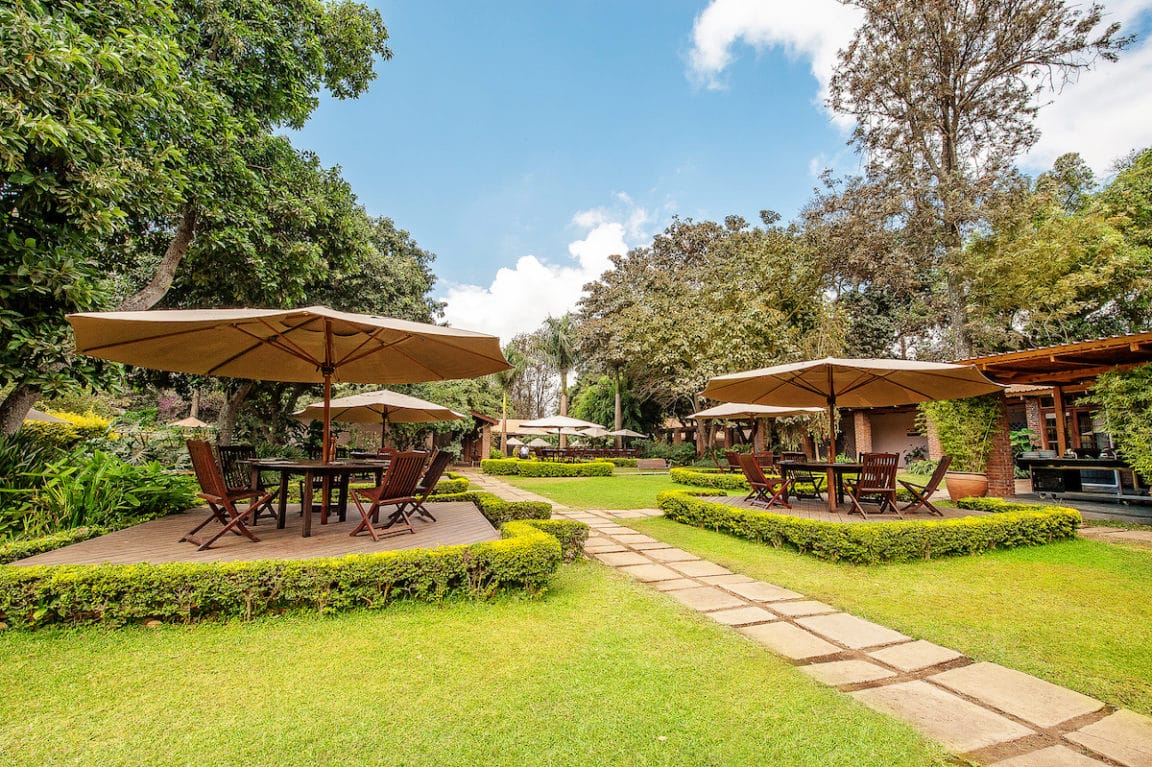
Arusha Coffee Lodge
A colonial-style coffee plantation lodge just outside Arusha, ideal for a pre- or post-safari night with an easy transfer to Kilimanjaro Airport.
Asanja Ruaha Camp
A relaxed camp in Tanzania’s wildest, least-visited big-cat country, for travellers ready to go beyond the Northern Circuit.
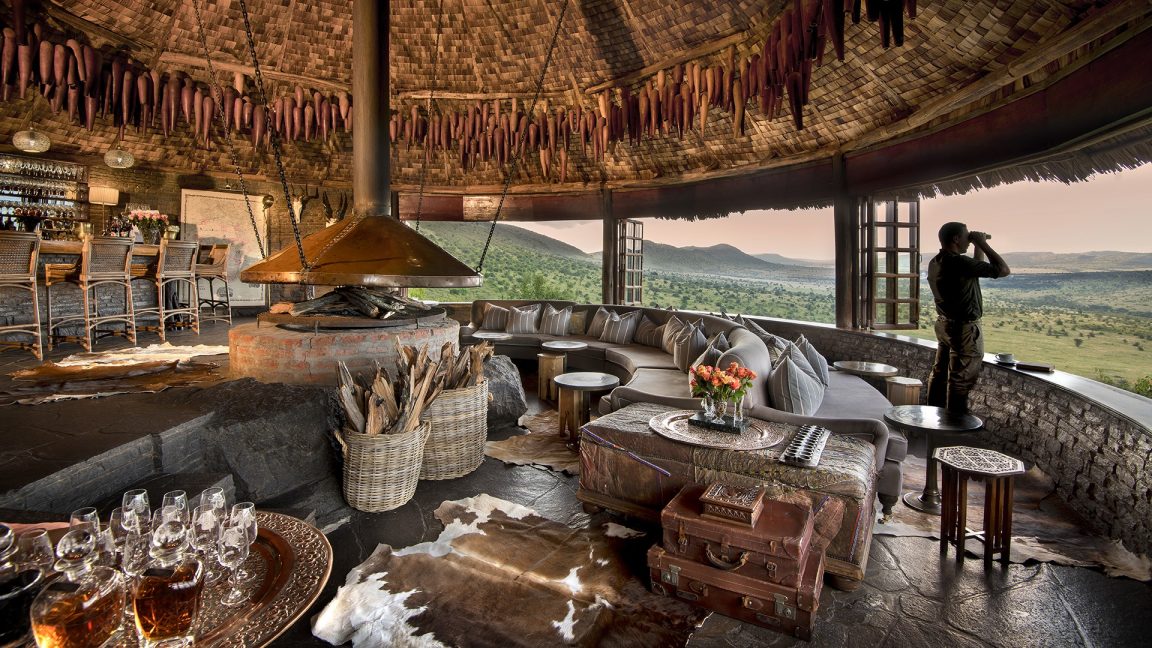
andBeyond Klein’s Camp
A private 25,000-acre concession on the Serengeti’s northern boundary, with off-road game drives and walking safaris not permitted inside the park itself.
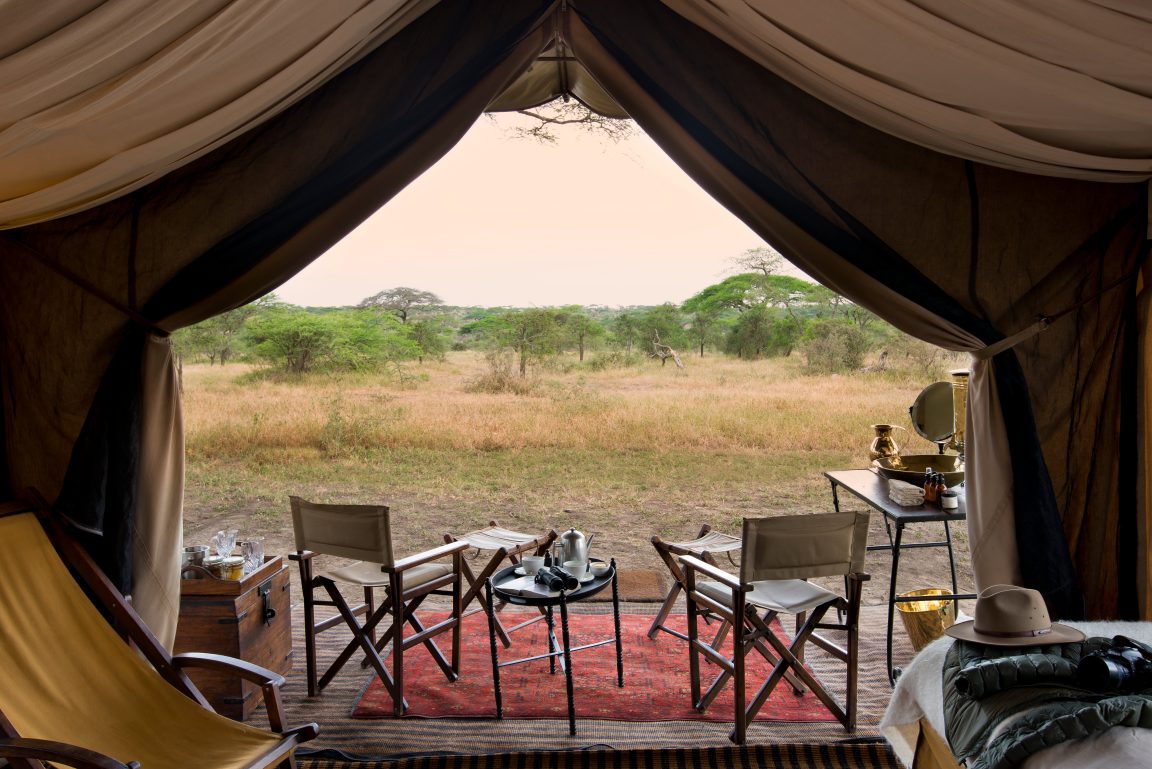
andBeyond Serengeti Under Canvas
A genuine mobile tented camp that relocates through the year to stay wherever the migration is — as close to a classic old-Africa safari as it gets today.
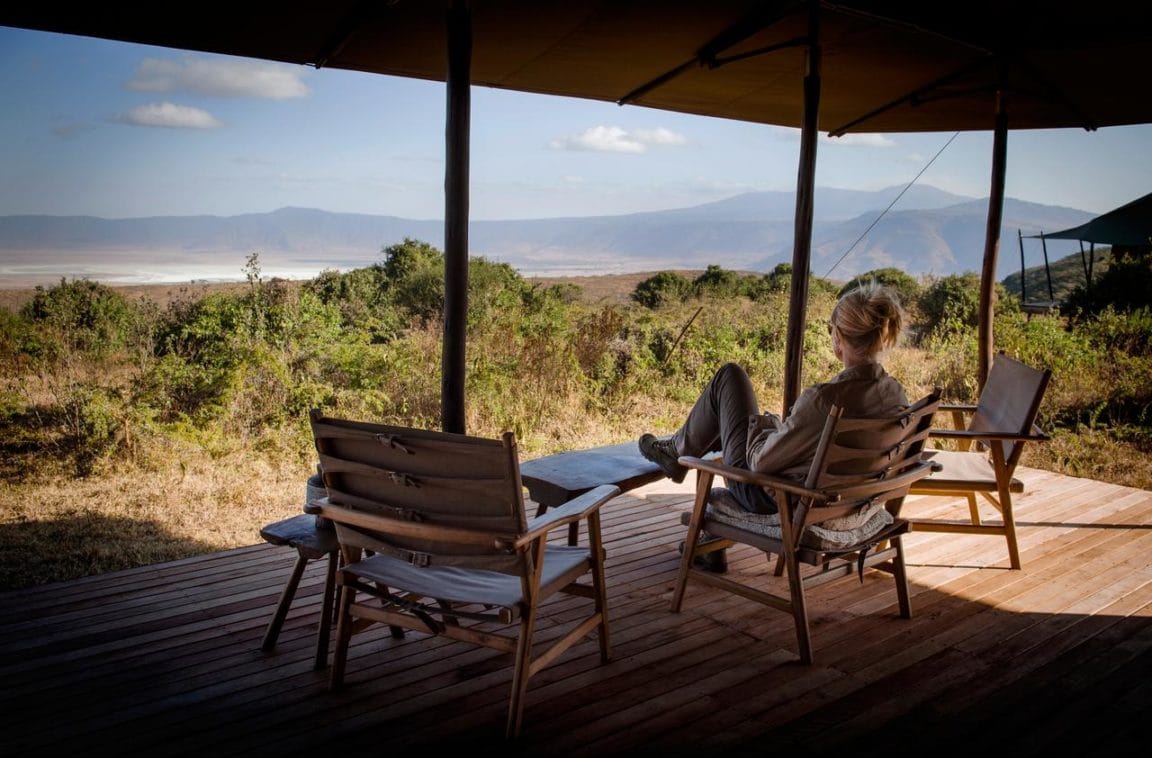
Entamanu Ngorongoro
A refined eco-tented camp on the Ngorongoro Crater’s rim, with sweeping panoramic views over the caldera and a more contemporary take on this iconic setting.
Zanzibar & the Coast
For most travellers from India, Tanzania is not a safari-only trip — Zanzibar and its outlying islands (Pemba, Mafia) are as much the point as the wildlife. A short flight from Kilimanjaro, Arusha or Dar es Salaam brings you to Stone Town’s spice-scented history and some of the Indian Ocean’s best beaches and reef diving. The islands are at their best in the drier months (roughly August–October and December–February) and best avoided during the March–May long rains.
Further afield, Tanzania also links naturally to a gorilla-trekking add-on in Rwanda for travellers with more time, and to Kenya’s Masai Mara for a combined migration safari across both countries — see our Kenya safari tours from India and Botswana safaris from India for the wider region.
Because we plan across the whole region, you are never boxed into a single country or a single kind of holiday. We will tell you honestly when adding a leg is worth it and when it is better to go deeper in one place — and we will make the joins invisible.
When & How to Book Your Tanzania Safari
How far ahead to book. Tanzania’s best camps — particularly Ngorongoro’s crater-rim lodges and any mobile camp during the July–October crossings — book six to twelve months ahead for peak season. If your dates are fixed around Indian school holidays or Diwali, the earlier you talk to us, the better the choice of camps you will have.
How the planning works with us. It begins with a conversation, not a quote. We want to understand who is travelling, what you dream of seeing, how you like to travel and what you would like to spend — and from there we build a tailor-made itinerary, talk it through with you, refine it, and only firm it up once it is right. You deal with a real person throughout, on email and WhatsApp, from the first idea to the moment you land home.
Payment and peace of mind. Camps are held with a deposit and balances fall due before travel; we lay out the schedule and the terms transparently, with no surprises. And because we have relationships with the camps and ground handlers, if a flight time shifts or a plan needs adjusting once you are travelling, it is handled quietly on our end.
When to start. The honest answer is: as soon as you are seriously considering it, particularly if your trip is timed to the migration or includes Zanzibar in peak season. Reach out whenever the idea takes hold.
Questions Indian Travellers Ask
Are there direct flights from India to Tanzania?
Yes — Air Tanzania flies direct between Mumbai and Dar es Salaam, an overnight service that moved to daily flights from June 2026. IndiGo has also discussed plans for a further direct route from around October 2026, though this is not yet confirmed as operating. Other routes connect via the Gulf hubs, Nairobi or Addis Ababa.
Do Indian citizens need a visa for Tanzania?
Yes — a visa arranged in advance via the official eVisa portal or the Tanzania High Commission in New Delhi. Always check the official portal directly for current requirements before applying.
When is the best time to visit Tanzania from India?
Tanzania is a year-round destination thanks to the migration’s long presence here. June to October is the classic dry season with the northern river crossings; January to March is calving season with excellent predator action and better value; the March–May long rains bring the lowest rates and quietest parks.
How much does a Tanzania safari from India cost?
We recommend budgeting an average of US$850–1,000 per person per night at well-appointed Northern Circuit camps, rising to US$1,000–1,500 at private-conservancy and mobile camps, and US$1,500 and up at the most exclusive luxury camps — all rates fully inclusive of accommodation, meals, drinks and activities, before international flights and visa costs.
Is Tanzania suitable for families?
Yes, particularly the Northern Circuit’s shorter drives and well-established camps, combined with Zanzibar’s beach resorts for an easy second half of the trip. We match families to the properties genuinely set up for children.
Should I fly or drive between camps in Tanzania?
The Northern Circuit is comfortably done by road, with flying as a time-saving option; the Southern and Western Circuit (Ruaha, Nyerere, Mahale) is reached almost exclusively by light aircraft from Dar es Salaam given the distances involved.
Will I find vegetarian food in Tanzania?
Yes. Vegetarian meals are widely and reliably available at camps and in Zanzibar’s resorts, and we share your dietary preferences with every property in advance so their kitchen is ready for you.
Why book Tanzania through Chalo Africa rather than online?
Because we understand Africa and India equally well, and we have been doing this for almost a decade and a half. Tanzania’s scale and four distinct circuits reward specialist planning more than almost anywhere else in Africa; booking engines and AI tools simply do not understand the region the way a specialist does.
Let’s Plan Your Tanzania Safari
Tell us how you like to travel and we’ll design a journey to match — the right camps, the right season, and the best value from India. No obligation, just expert advice from people who know Africa and India equally well.