
Botswana Safari Tours from India
Expertly planned Botswana safaris — designed with you in India, delivered on the ground in the Okavango Delta, Chobe and the Kalahari by specialists who know both sides of the journey.
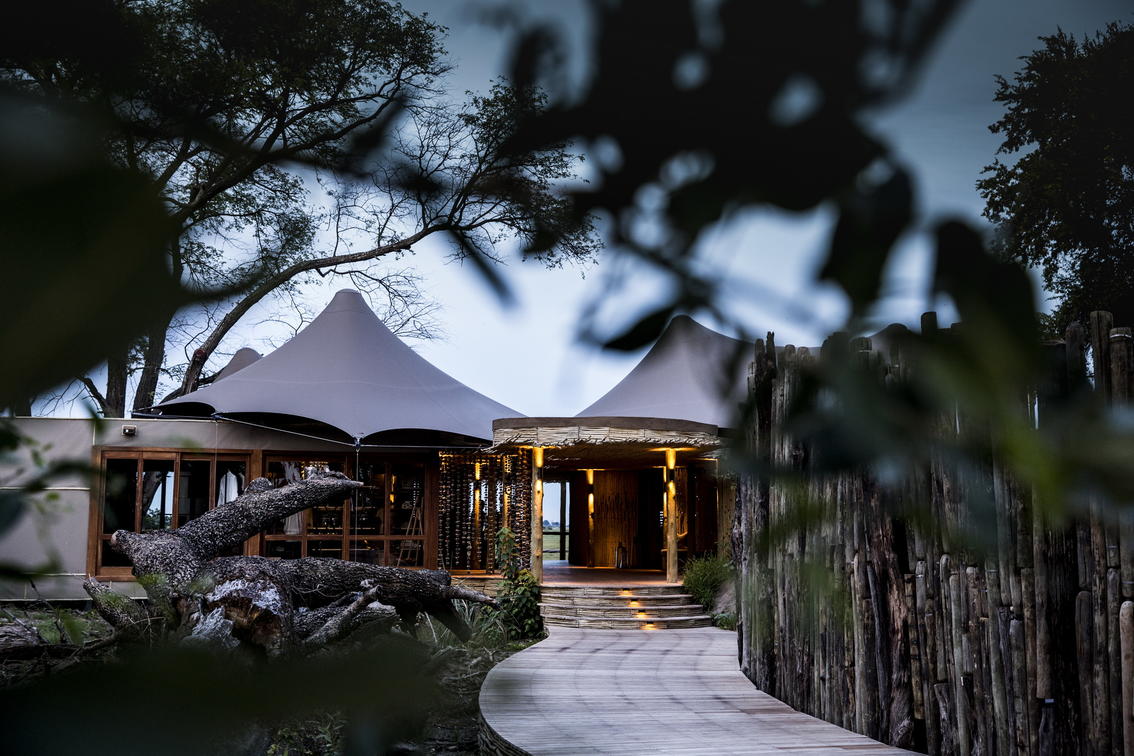
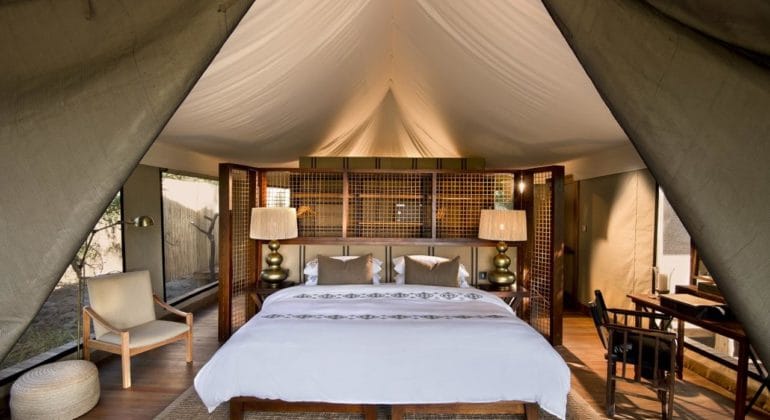
Photo · Jao Camp, Okavango Delta
The Chalo View — Why Botswana, from India
Botswana decided, decades ago, to protect its wilderness by limiting the number of people allowed into it — “low volume, high value” tourism — resulting in some of the most exclusive, least-crowded and wildlife-dense safari country left on Earth. The Okavango Delta floods every year into a maze of channels and islands unlike anywhere else in Africa; Chobe National Park holds the largest elephant population on the continent; and the Central Kalahari and the Makgadikgadi Pans offer a completely different, stark and beautiful desert safari.
For travellers from India, Botswana is a considered choice rather than a first stop — often the trip you take after Kenya or Tanzania, when you want fewer vehicles at a sighting, water-based safaris by mokoro canoe, and camps so private that some limit numbers to a handful of tents. It takes a little more planning to reach and it costs more per day, but very few destinations reward that investment as completely.
Why Plan Your Botswana Safari With Chalo
Africa & India, equally understood
We have been planning African safaris from India for almost a decade and a half. Botswana in particular rewards specialist knowledge — which concession suits which month, which camps pair well on a single light-aircraft circuit — and we know exactly how travellers from India like to move through a trip.
Partner with Hundreds of Camps across Africa
From the Okavango Delta to the Masai Mara, we work directly with hundreds of camps and lodges across the continent, securing priority space and preferential rates for our travellers in a country where the best camps hold only a handful of rooms and sell out far in advance.
Specialists, Not Algorithms
Booking engines and AI tools do not understand Africa, even when they pretend to — they generalise, and Botswana’s fly-in logistics punish generalisation more than most. Every itinerary here is hand-built by a specialist who has been there, on WhatsApp with you before, during and after the trip.
Understanding Botswana Safaris from India
Botswana does not work like Kenya or Tanzania, and it helps to understand the difference before you plan. Instead of driving between parks packed with other vehicles, a Botswana itinerary is usually built around two, three or four private concessions — large leased tracts of wilderness, each with a single camp or a small handful of camps, and each offering activities the neighbouring national park cannot: off-road driving, night drives, walking safaris and, in the Delta, mokoro and boat safaris through the floodplains.
Because concessions are exclusive to their camp’s guests, sightings are shared with a fraction of the vehicles you would find in the Masai Mara or the Serengeti in peak season. The trade-off is cost: fewer beds per square kilometre means a higher nightly rate, and almost everywhere requires a short light-aircraft flight to reach. (For the complete picture, see our full range of Botswana safaris.)
Most first Botswana trips combine the Okavango Delta with Chobe National Park — water and elephants, the two signature experiences — and add a Kalahari or Makgadikgadi camp for travellers who want the desert side of the country as well. Part of our job is deciding how many camps to include and in what order, so the trip flows rather than feels like a checklist.
Flights & Accessibility — Getting to Botswana from India
There are no direct flights from India to Botswana, so every trip connects. The most common routing is via Johannesburg, reached either through the Gulf hubs — Emirates (Dubai), Qatar Airways (Doha) or Etihad (Abu Dhabi) — or via Ethiopian Airlines through Addis Ababa, before a onward flight into Botswana on Air Botswana or a regional carrier to Gaborone, Maun or Kasane. Total journey time from Mumbai typically runs to fourteen to seventeen hours including connections, and a little more from other Indian cities.
Because it is a long day of travel either way, we usually recommend breaking the journey with a night in Johannesburg rather than pushing straight through — it keeps the first day of safari fresh instead of jet-lagged. An alternative some of our travellers love: fly into Victoria Falls Airport, spend two or three nights seeing the Falls, and then transfer overland into Chobe National Park to begin the Botswana leg from there.
Once inside the country, Maun is the gateway to the Okavango Delta and the Kalahari, while Kasane serves Chobe National Park — both are small, efficient airports built around exactly this kind of connecting safari traffic.
Getting Around Botswana — Why Fly-In Safaris Are Essential
Unlike Kenya, where a road safari is a genuine budget-friendly option, Botswana is overwhelmingly a fly-in country. The Okavango Delta floods for much of the year, the Central Kalahari is vast, sandy and largely roadless, and the private concessions were designed around light-aircraft access from the outset. A typical itinerary moves between camps on small bush planes — usually a twelve-seat Cessna Caravan or similar — hopping from Maun to a Delta airstrip, or from Kasane to a Chobe or Linyanti camp, in twenty minutes to an hour.
The one exception is Chobe itself: camps clustered around Kasane and along the Chobe riverfront can be reached by road transfer from the airport, and self-drive tourism is genuinely popular there among regional visitors. For a trip from India built around two or three regions, though, we almost always recommend flying between camps — it protects your limited days for game viewing rather than long drives, and it is simply how the best Delta and Kalahari camps are reached. Light-aircraft operators enforce a strict luggage limit, usually around 20kg per person in a soft-sided bag, which shapes how we advise you to pack.
Best Time to Visit Botswana — Planned Around Indian Holidays
If you can only pick one window, make it June to October — the dry season, when the Okavango Delta is at its fullest (the floodwater arrives from Angola’s highlands and peaks locally around July and August) and animals concentrate reliably around shrinking water sources. September and October add serious heat but the very best game concentrations of the year, especially elephant. For a quieter, greener and considerably better-value trip, the shoulder months either side reward travellers happy to trade a little predictability for lower rates and fewer other vehicles.
| Indian travel window | Months | What’s happening in Botswana | Best for |
|---|---|---|---|
| Summer holidays | Apr–May | Green season easing into dry; the Delta still holds water from the rains, landscapes are lush, and rates are at their lowest of the year. | Value; photographers; quiet camps |
| Summer holidays | Jun | Dry season begins; skies clear, nights turn cold, and the Delta’s floodwater starts arriving from further north. | Comfortable game viewing without peak prices |
| Summer / Dussehra break | Jul–Aug | The Delta floods to its fullest — mokoro and boat safaris at their best, water everywhere, wildlife concentrated at the margins. | Water safaris; the classic Delta experience |
| Diwali & onward | Sep–Oct | Hot and dry, water sources scarce away from the Delta and rivers — the single best window for elephant and predator sightings in Chobe. | Big game; serious wildlife photography |
| Short rains | Nov | First rains soften the heat, migratory birds arrive, and the bush greens up within days. | Birding; transitional light for photography |
| New Year & winter break | Dec–Feb | Green season proper — dramatic skies, newborn animals, and the Kalahari’s zebra migration begins building. | Families; the Central Kalahari; lower rates |
| Quiet cusp | Mar | The tail of the rains, with the Kalahari zebra migration underway and the Delta’s floodwater yet to arrive — an underrated, uncrowded month. | Solitude; Kalahari specialists |
Where to Safari in Botswana — The Parks & Regions
The Okavango Delta. An inland river delta unlike anywhere else on Earth, where the Okavango River fans out into the Kalahari sands and never reaches the sea. Private concessions around its fringes and islands offer a rare mix of water-based mokoro and boat safaris alongside conventional game drives and walking, with year-round birdlife and resident big cats.
Chobe National Park. Home to the largest elephant population of any park in Africa — herds numbering in the tens of thousands gather along the Chobe River, especially in the dry season, alongside excellent lion and buffalo sightings. The Savute region within Chobe adds a very different, drier landscape with its own predator dynamics.
Moremi Game Reserve. Bridging the Delta and drier bushveld, Moremi is often called one of the most beautiful reserves in Africa — a rich mix of lagoons, floodplains and mopane woodland with outstanding game density.
The Central Kalahari & Makgadikgadi. A completely different Botswana — vast desert and ancient salt pans, home to desert-adapted wildlife, meerkat colonies, brown hyena, and (in season) a zebra migration second in scale only to East Africa’s. Nights under some of the clearest, darkest skies in Africa and visits to San Bushmen communities round out this region’s appeal.
Suggested Botswana Safari Itineraries from India
Every trip we plan is tailor-made, but it helps to see how the pieces fit together. These are illustrative shapes — starting points we will bend entirely around your dates, budget and interests — each linked to a real sample itinerary so you can see the idea in full.
The Kalahari Introduction — 6 to 7 Days
A focused first taste built around the Central Kalahari and Makgadikgadi — desert-adapted wildlife, meerkats, San Bushmen encounters and some of Africa’s clearest night skies, with the seasonal zebra migration as a bonus in the right months.
Chobe & the Okavango Delta — 8 Days
The classic pairing: elephant-rich Chobe National Park for a few nights, then on to the Okavango Delta for mokoro and water safaris — two of Botswana’s signature landscapes on one circuit, ideal for photographers and first-time visitors alike.
The Conservation Journey — 8 Days
An immersive trip that goes beyond game drives into Botswana’s conservation story — community and research partnerships alongside outstanding wildlife, in private concessions that fund exactly this kind of work.
The Grand Circuit — 14 Days
For travellers with time to go deeper, extend beyond Botswana’s borders into Mana Pools and the Mababe Depression — a once-in-a-lifetime combination for those who want the fullest possible picture of the region in a single trip.
Tell us your dates and your dream — or browse our full range of Botswana safaris and itineraries for more inspiration — and we will draw the map.
Wildlife, Game Drives & Water Safaris
Chobe’s elephant herds are the headline — tens of thousands strong, drawn to the Chobe River especially through the dry season, alongside strong lion, buffalo and leopard sightings. But what sets Botswana apart is how you see it: the Okavango Delta is one of the very few places in Africa where a safari includes gliding silently through papyrus channels by mokoro, poled by a local guide, alongside the more familiar 4×4 game drives and walking safaris in the private concessions.
The Kalahari adds an entirely different cast — meerkat colonies habituated enough for close encounters, brown hyena, aardvark and other nocturnal specialists rarely seen elsewhere, plus (in season) a zebra migration across the Makgadikgadi that rivals East Africa’s in scale if not in fame. Birdlife throughout the country is exceptional, with the Delta alone hosting well over 400 recorded species.
Accommodation & Camp Life
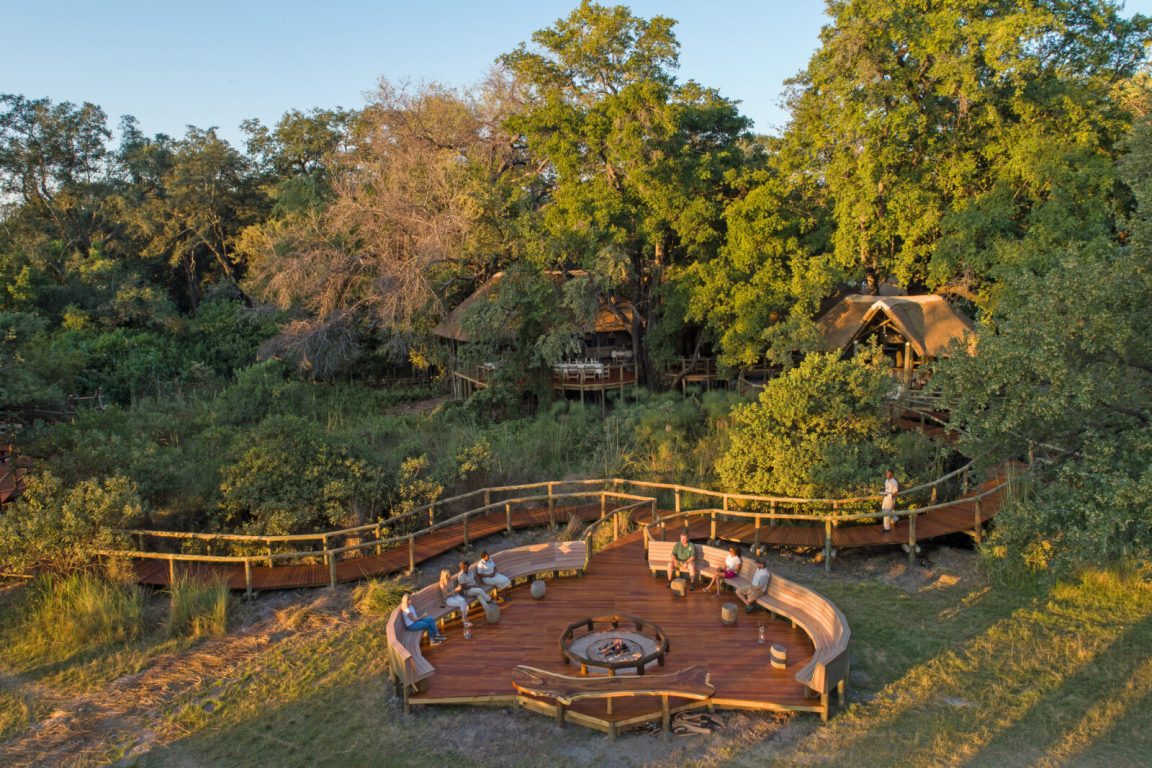
Botswana’s “low volume, high value” model means camps are deliberately small — often eight to twelve tents or fewer, sometimes as few as five, each on an exclusive private concession shared with no other operator. Rooms are almost always raised tented suites or thatched chalets on wooden decking, built to leave a minimal footprint, with en-suite bathrooms, private plunge pools at the more luxurious properties, and unfenced access to the bush right at your doorstep.
Rates are fully inclusive — accommodation, all meals, most drinks, twice-daily game activities and, usually, the light-aircraft transfers between camps on a single itinerary. Because there is no fencing between camp and wilderness, wildlife moves freely through camps after dark, and every property runs an escort system for moving around at night — part of the genuine, unsanitised bush experience Botswana is known for.
What a Botswana Safari Costs
Botswana costs more per day than Kenya or Tanzania, and that is by design — the government’s low-volume, high-value policy limits bed numbers to protect the wilderness, which pushes nightly rates up in return for far fewer vehicles at any sighting. Budget on average from around US$1,000–1,400 per person per night at accessible entry-level camps, rising to US$1,500–2,200 at well-appointed mid-range properties, and US$2,500 and up at the most exclusive Delta icons. Rates are all-inclusive: accommodation, all meals, drinks, twice-daily activities and, typically, light-aircraft transfers between camps on your circuit — international flights and the Botswana visa are the main costs on top.
Because beds are so limited, the best camps — particularly in the Delta during peak dry season — can sell out six months to a year ahead, which is worth building into your planning timeline from the start.
Visa & Entry Requirements for Indian Passport Holders
Indian passport holders need a visa to enter Botswana. Botswana does run a general e-visa portal, but eligibility and processing for Indian applicants through it can be inconsistent, and entry requirements are applied strictly at the border — so we recommend the traditional route: applying in person through the Botswana High Commission in New Delhi or the Honorary Consulate in Mumbai, rather than relying on the e-visa. Applications typically ask for a completed form, a copy of your passport (valid at least six months beyond travel), a cover letter, passport photographs, your full travel itinerary, proof of return flights and accommodation, evidence of sufficient funds and recent bank statements, plus a non-refundable application fee. A standard single-entry tourist visa generally permits a stay of up to thirty days.
The High Commission quotes around ten to twelve working days for processing, but we advise building in at least five weeks before departure — appointment slots and any follow-up document requests can slow things down beyond the official estimate. Because requirements, fees and processes can and do change, we always point our travellers to the official Botswana High Commission for the current process rather than arranging the visa ourselves — we will tell you exactly what to expect and when to start, but the application itself is yours to submit.
Health, Vaccinations & Safety
Botswana does not require a yellow fever certificate for travellers arriving directly from India, but if your routing transits a country with risk of yellow fever transmission, proof of vaccination may be requested on arrival — a detail worth checking against your specific flight routing. Malaria risk exists in the northern safari areas, including the Okavango Delta and Chobe, particularly during and after the rainy season, and most travellers take a course of antimalarial tablets alongside standard precautions such as repellent and covering up at dusk.
We always recommend a visit to a registered travel clinic or your personal physician four to six weeks before departure to confirm current vaccination and antimalarial guidance for your specific itinerary and health history — we are safari specialists, not medical professionals, so we point you towards the right expertise rather than prescribing it ourselves. Botswana’s camps are professionally run with trained guides, clear safety briefings and, in the remote Delta and Kalahari, established medical evacuation arrangements as standard practice.
Money, Payments & Connectivity
The local currency is the Botswana Pula (BWP), though almost every cost of an all-inclusive safari — camps, transfers, activities — is settled in advance in US dollars, so you will handle relatively little local cash. Bring US dollars in smaller denominations for tips and incidentals; camp gift shops and some lodges accept cards, but connectivity for card machines can be patchy in the bush, so cash is the more reliable fallback. ATMs are limited to towns such as Maun, Kasane and Gaborone, not the camps themselves.
Wifi is intentionally limited or absent at many remote Delta and Kalahari camps — part of the appeal, many travellers find — while Maun, Kasane and Johannesburg offer normal connectivity. Most camps can arrange an emergency call out if you need to reach home, and we brief every traveller on what to expect at each specific property before you go.
Food, Diet & Indian Preferences
Camps serve full-board international menus built around fresh, seasonal ingredients, often with a South African or pan-African influence, and dining is usually a shared, sociable affair around a single table or fire. Vegetarian meals are available at effectively every camp we work with in Botswana — simply let us know your preferences when we plan your trip, and we pass them on to each property in advance so the kitchen is ready before you arrive.
Very specific or highly specialised dietary requirements cannot always be guaranteed at small, remote bush kitchens far from a supermarket, so we are upfront about what each camp can genuinely deliver rather than overpromising, and we steer you towards the properties best placed to look after you well.
Packing, Luggage & Clothing
Because most Botswana itineraries involve light-aircraft transfers, luggage is genuinely restricted — typically around 20kg per person in a soft-sided, non-rigid bag (no hard-shell suitcases and no external frames), including hand luggage. We share the exact allowance for your specific flights well before departure so packing is never a last-minute scramble.
Pack in neutral, muted colours (khaki, olive, sand) for game drives and walking safaris, and bring layers — dry-season mornings on an open vehicle can fall close to freezing even though afternoons are warm, especially June to August. A swimsuit for camp pools and mokoro outings, a good hat, sunglasses, high-factor sunscreen and insect repellent round out the essentials, along with a head torch for camps without fenced perimeters after dark.
Safety, Emergencies & Practical Concerns
Botswana is a stable, well-run country and its safari industry is professionally regulated, with trained, licensed guides at every camp. Because camps are unfenced, you will always be escorted after dark between your tent and communal areas — a routine precaution, not a cause for alarm, and one every guest quickly gets used to. Remote camps maintain established medical evacuation arrangements, and guides carry satellite communication as standard.
Simple habits matter most: follow your guide’s instructions on and off vehicles, never walk unescorted after dark, keep a respectful distance from all wildlife including at watering holes near camp, and treat mokoro and boat safaris with the same seriousness as a game drive. We brief every traveller on what to expect at each specific camp before you arrive.
Family, Women & Senior Travellers
Families
Botswana asks a little more planning for families than Kenya does — many private-concession camps set a minimum age of six to twelve years old, since walking safaris, mokoro trips and unfenced camps demand a degree of caution around young children. The reward is worth it: a small number of excellent family-friendly camps offer dedicated family units, junior-ranger activities and guides who tailor game drives to children’s attention spans, and we match you to exactly those properties.
Women Travellers
Botswana’s small-camp model means you are known by name from the moment you arrive, escorted between your tent and communal areas after dark, and looked after by an experienced, professional team throughout. Many of our women travellers plan solo trips or small group getaways here specifically for that sense of security combined with genuine wilderness, and we are always a WhatsApp message away.
Senior & Multi-Generational
Fly-in safaris are, in some ways, gentler on senior travellers than long overland days — short light-aircraft hops replace hours of driving, and many camps have raised boardwalks connecting tents to communal areas. We choose properties with easy, step-free access where mobility is a concern, and pace multi-generational trips so everyone travels comfortably together.
A Few Botswana Camps We Love
Prices are per person per night, fully inclusive.
Mombo Camp
Often called “the place of plenty” — a legendary camp on Chief’s Island with some of the best year-round predator viewing in Africa.
Chobe Game Lodge
The only permanent lodge inside Chobe National Park — riverside game viewing on the doorstep of Africa’s largest elephant population.
Jack’s Camp
Vintage-style desert glamour on the edge of the salt pans, with meerkat encounters, quad-biking and some of Africa’s darkest night skies.
Camp Moremi
A classic tented camp on the Xakanaxa Lagoon, rebuilt in 2018, delivering the archetypal Botswana safari experience at a relatively gentler price.
andBeyond Nxabega
Elegant suites beneath towering ebony trees, with year-round water and land safaris — mokoro, boat cruises and game drives from one camp.
Combining Botswana with Victoria Falls & Beyond
Botswana sits at the heart of a cluster of world-class destinations, and for travellers coming all the way from India, it is often worth linking two or three together into one longer trip.
Victoria Falls. A short flight (or, from Chobe, a road transfer) connects to Victoria Falls, on the Zimbabwe and Zambia border — one of the seven natural wonders of the world, and the single most popular add-on to a Botswana safari. A few nights here, staying at a property such as The Elephant Camp on the Zimbabwean side or Thorntree River Lodge across the river in Zambia, bookends a Chobe-based itinerary beautifully.
South Africa. Cape Town’s coastline and Winelands, or a further Big Five safari in the Kruger region, pair naturally with Botswana via Johannesburg — see our South Africa holidays from India for that side of the trip.
Tanzania. For travellers who want a second migration-country safari, the Serengeti and Ngorongoro Crater combine naturally with Botswana via a regional connection — see our Tanzania safaris from India for that side of the trip.
Rwanda. For travellers who want to add mountain gorilla trekking to their trip, Volcanoes National Park is reachable via a regional connection — see our Rwanda safaris from India for that side of the trip.
Because we plan across the whole region, you are never boxed into a single country. We will tell you honestly when adding a leg is worth it and when it is better to go deeper in one place — and we will make the joins invisible.
When & How to Book Your Botswana Safari
How far ahead to book. Because Botswana’s best camps hold only a handful of rooms each, they sell out further ahead than almost anywhere else in Africa — the most sought-after Delta properties are often booked out six to twelve months in advance, and sometimes longer for the peak July-to-October dry season. If your dates are fixed, the earlier you talk to us, the better the choice of camps you will have.
How the planning works with us. It begins with a conversation, not a quote. We want to understand who is travelling, what you dream of seeing, how you like to travel and what you would like to spend — and from there we build a tailor-made itinerary, talk it through with you, refine it, and only firm it up once it is right. You deal with a real person throughout, on email and WhatsApp, from the first idea to the moment you land home.
Payment and peace of mind. Camps are held with a deposit and balances fall due before travel; we lay out the schedule and the terms transparently, with no surprises. And because we have relationships with the camps and ground handlers, if a flight time shifts or a plan needs adjusting once you are travelling, it is handled quietly on our end.
When to start. The honest answer is: as soon as you are seriously considering it. Given how far ahead the best Botswana camps book up, an early conversation — even a year out — lets us hold the right properties and shape the trip properly. Reach out whenever the idea takes hold.
Questions Indian Travellers Ask
Are there direct flights from India to Botswana?
No — every route connects, most commonly via Johannesburg (reached through the Gulf hubs or Ethiopian Airlines) with an onward flight to Gaborone, Maun or Kasane. Total journey time from Mumbai typically runs fourteen to seventeen hours including connections, and we usually recommend breaking the trip with a night in Johannesburg.
Do Indian citizens need a visa for Botswana?
Yes — a visa arranged in advance is required. Botswana does run a general e-visa portal, but given inconsistent eligibility and strict entry requirements for Indian applicants, we recommend applying the traditional way through the Botswana High Commission in New Delhi or the Honorary Consulate in Mumbai, and building in at least five weeks for processing; always check with them directly for current requirements before applying.
When is the best time to visit Botswana from India?
June to October is the dry season and the classic safari window, with the Okavango Delta at its fullest around July and August and the very best game concentrations in September and October. April–May and November offer a greener, better-value trip with fewer other travellers.
How much does a Botswana safari from India cost?
Budget on average from US$1,000–1,400 per person per night at accessible camps, US$1,500–2,200 at well-appointed mid-range properties, and US$2,500 and up at the most exclusive Delta camps — all rates are fully inclusive of accommodation, meals, drinks and activities, before international flights and visa costs.
Is Botswana suitable for families?
With the right planning, yes — though many private-concession camps set a minimum age of six to twelve years due to walking and mokoro activities and unfenced camps. We match families to the smaller number of camps genuinely set up for children, with dedicated family units and tailored activities.
Should I fly or drive between camps in Botswana?
Almost always fly. The Okavango Delta, Kalahari and Makgadikgadi are reached by light aircraft from Maun, and even Chobe is best combined with a flight if you are also visiting the Delta — only camps clustered around Kasane are realistically reachable by road transfer alone.
Will I find vegetarian food in Botswana?
Yes. Vegetarian meals are available at effectively every camp we work with, and we share your dietary preferences with each property in advance so their kitchen is ready for you. Very specialised diets cannot always be guaranteed at small, remote bush kitchens, so we set expectations honestly.
Why book Botswana through Chalo Africa rather than online?
Because we understand Africa and India equally well — and we have been doing this for almost a decade and a half. Botswana’s fly-in logistics and limited-bed camps punish generalist planning more than almost anywhere else in Africa; booking engines and AI tools simply do not understand the region the way a specialist does.
Let’s Plan Your Botswana Safari
Tell us how you like to travel and we’ll design a journey to match — the right camps, the right season, and the best value from India. No obligation, just expert advice from people who know Africa and India equally well.