
Uganda Health & Vaccinations
Malaria & Yellow Fever
Uganda Health Information
Major cities in Uganda have good-quality health care services available. However, in remote locations, access may be limited.
As always, when travelling to any destination, please be sure you are up to date with all routine vaccinations. Commonly recommended vaccinations for travel to Africa include the following: Tetanus, Diphtheria, Polio, Typhoid, Hepatitis A, Hepatitis B, Yellow Fever, Rabies, and Meningitis. Visit your doctor several weeks before your trip to ensure that you have all the vaccines and medications you need.
Malaria Recommendations for Uganda
Uganda poses a malaria risk, and thus we advise prospective travelers to consult with their physicians about medicines to take before, during, and after their trip.
Yellow Fever Vaccination Requirements for Uganda
Uganda requires a valid yellow fever vaccination certificate from all foreign visitors and citizens aged 9 months and over whatever country they are arriving from, including on a direct flight. Uganda is itself a yellow fever risk country. The countries below are also classed as having transmission risk, which is what decides whether you need the certificate for wherever you go after Uganda: Angola, Argentina, Benin, Bolivia, Brazil, Burkina Faso, Burundi, Cameroon, Central African Republic, Colombia, Costa Rica, Congo, Cote d’Ivoire, Democratic Republic of Congo, Ecuador, El Salvador, Equatorial Guinea, Ethiopia, French Guyana, Gabon, Gambia, Ghana, Guatemala, Guinea, Guinea Bissau, Kenya, Liberia, Mali, Mauritania, Honduras, Nicaragua, Nigeria, Panama, Paraguay, Peru, Rwanda, Sao Tome and Principe, Senegal, Sierra Leone, South Sudan, Sudan, Suriname, Togo, Trinidad, and Venezuela.
Yellow Fever Vaccination Requirements for US Citizens
Health recommendation: Yellow fever is a risk in Uganda, so CDC recommends this vaccine for all travelers who are 9 months of age or older.
Country entry requirement: Required for arriving travelers from all countries. Also, proof of yellow fever vaccination required of all travelers leaving Uganda.
More details at:
Yellow Fever Vaccination Requirements for Indian Citizens
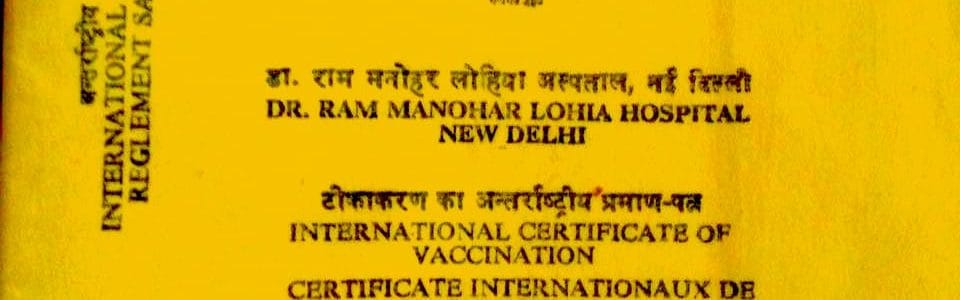
All visitors travelling from India to Uganda are required to be vaccinated against yellow fever with an international certificate proving so. While there is no health check on departure from India, you will be checked upon your return. Thus, it is mandatory to be in possession of a valid international vaccination certificate of yellow fever before your departure. This certificate must be issued from an approved vaccination center.
The yellow fever vaccination needs to be given at least ten days before arriving in a yellow-fever-endemic area and must be administered at an approved yellow fever vaccination center.
More details at:
- https://mohfw.gov.in/media/disease-alerts/yellow-fever
- https://www.chaloafrica.com/diary/yellow-fever-vaccination-requirements-from-india/
Choosing between countries?
If Uganda is still one of several options, our guide to African safari destinations compares every country we work in side by side, including malaria status, the best months to visit, typical trip lengths and starting prices.
Uganda health and vaccinations: common questions
Do I need a yellow fever certificate to enter Uganda?
Yes. Uganda is one of only two countries in our portfolio that requires proof of yellow fever vaccination from all arriving travellers aged nine months and over, whatever your origin — a direct flight from London or Mumbai still needs it. Note the age threshold is nine months, not one year; many operator pages get this wrong. Under the International Health Regulations the yellow fever certificate has been valid for life since 11 July 2016, and that applies retrospectively to certificates issued before then. No country may demand a booster as a condition of entry. The certificate becomes valid on the tenth day after vaccination. Ugandan immigration genuinely checks, so carry the physical certificate.
Is there malaria in Uganda?
Yes, throughout the country, including Kampala and Entebbe. There are no malaria-free areas. Bwindi and Mgahinga sit at altitude but are not exempt in current UK guidance. Which antimalarial is right for you depends on your health and your itinerary — that is a travel-clinic conversation, and we do not administer or arrange prophylaxis.
How fit do I need to be to trek gorillas?
Fitter than most people expect. Gorilla trekking involves sustained exertion between roughly 1,500 and 2,600 metres, and trek length depends entirely on where the group slept — it can be forty minutes or six hours uphill through nettles. There is also a rule worth knowing before you book: you must be free of respiratory illness, because it is transmissible to gorillas, and permits are not refunded for a cold. That makes travel insurance a genuine requirement rather than a formality.
What else should I know about health in Uganda?
Schistosomiasis is present in Lake Victoria and the Nile. Rabies is worth discussing for longer trips. Ebola and Marburg outbreaks occur periodically in the region — the sensible approach is to check current notices close to departure rather than treat it as a standing risk, and we monitor this for every trip we run. A clinic will typically cover hepatitis A, typhoid, tetanus, diphtheria, polio and MMR, and may raise meningococcal ACWY for northern Uganda.
When should I get all this done?
Six to eight weeks before departure is the usual advice, and the yellow fever certificate specifically only becomes valid on the tenth day after vaccination — so a last-minute appointment does not work for Uganda, where the certificate is mandatory. Once your clinic appointment is booked, the more enjoyable planning question is when to travel: gorilla permits are cheaper in April, May and November, and our guide to the best time to visit Uganda explains the trade-off.