

Namibia Health & Vaccinations
Malaria and Yellow Fever
Namibia Health Information
As with any foreign destination, it is important to check with your doctor(s) well ahead of your departure date regarding vaccinations and other necessary health precautions. Compared to other African countries, Namibia’s healthcare system remains among the more advanced. The quality of care will begin to vary as one enters the rural areas.
Malaria Recommendations for Namibia
Namibia’s capital of Windhoek poses no malaria risk. Cases have been found, however, in the regions of Kavango (East and West), Kunene, Ohangwena, Omusati, Oshana, Oshikoto, Otjozondjupa, and Zambezi. If your travels implicate any of these regions, it is strongly recommended that you consult your healthcare professional about anti-malaria vaccinations.
Yellow Fever Vaccination Requirements for Namibia
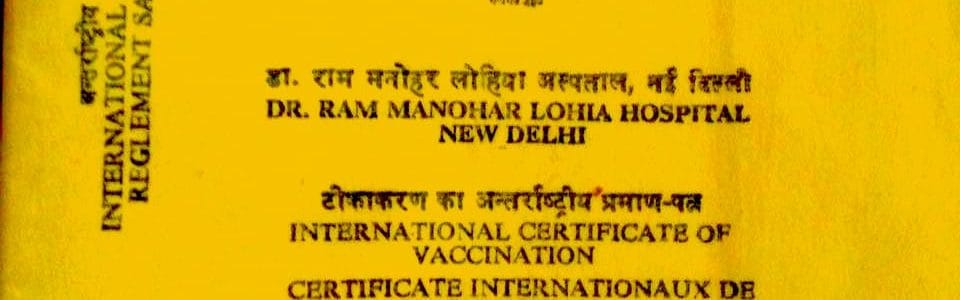
There is no yellow fever risk in Namibia. Therefore, the country requires a yellow fever vaccination certificate from those travelling from the following countries (travel includes transit stays that surpass 12 hours): Angola, Argentina, Benin, Bolivia, Brazil, Burkina Faso, Burundi, Cameroon, Central African Republic, Chad, Colombia, Congo, Cote d’Ivoire, Democratic Republic of Congo, Ecuador, Equatorial Guinea, Ethiopia, French Guyana, Gabon, Gambia, Ghana, Guinea, Guinea Bissau, Kenya, Liberia, Mali, Mauritania, Nigeria, Panama, Paraguay, Peru, Senegal, Sierra Leone, South Sudan, Sudan, Suriname, Togo, Trinidad and Tobago, Uganda, and Venezuela.
Yellow Fever Vaccination Requirements for US Citizens
Health recommendation: There is no risk of yellow fever in Namibia. The government of Namibia requires proof of yellow fever vaccination only if you are arriving from a country with risk of yellow fever. This does not include the US.
More details at:
Yellow Fever Vaccination Requirements for Indian Citizens
You do not need a yellow fever certificate if you are travelling from India to Namibia and back.
More details at:
- https://mohfw.gov.in/media/disease-alerts/yellow-fever
- https://www.chaloafrica.com/diary/yellow-fever-vaccination-requirements-from-india/
Choosing between countries?
If Namibia is still one of several options, our guide to African safari destinations compares every country we work in side by side, including malaria status, the best months to visit, typical trip lengths and starting prices.
Namibia health and vaccinations: common questions
Do I need a yellow fever certificate to enter Namibia?
Only if you are arriving from a country with risk of yellow fever transmission, including airport transits over twelve hours — and note that Namibia’s age threshold is nine months, not the one year most of its neighbours use. Namibia is not itself a risk country. Under the International Health Regulations the yellow fever certificate has been valid for life since 11 July 2016, and that applies retrospectively to certificates issued before then. No country may demand a booster as a condition of entry. The certificate becomes valid on the tenth day after vaccination. Windhoek connections via Addis Ababa or Johannesburg are the routings where this comes up.
Which parts of Namibia are malaria-free?
Most of the country is very low risk, which covers Sossusvlei, the Namib-Naukluft, southern Damaraland, Windhoek, Swakopmund and the Walvis Bay coast — the areas families most often ask about. The exceptions matter, though: Kavango East, Kavango West and the Zambezi Strip are high risk all year, and Kunene, Omusati, Oshana, Ohangwena, Oshikoto, Omaheke and Otjozondjupa are high risk from December to April. That catches Etosha, which is seasonal rather than malaria-free. The defensible phrasing is very low risk with bite avoidance, not malaria-free — and prophylaxis is a travel-clinic decision.
What are the real risks on a Namibian trip?
Not the wildlife. Namibia’s leading serious incident is the gravel-road rollover — distances are enormous, surfaces are loose, and self-drive visitors routinely underestimate both. Heat and dehydration in the Namib are the second. Rabies is present, including in jackals and kudu in the north, and schistosomiasis in the Kavango and Zambezi rivers. Evacuation distances are long enough that comprehensive cover is essential rather than advisable.
What vaccinations are usually advised for Namibia?
A clinic will typically go through hepatitis A, typhoid, tetanus, diphtheria, polio and MMR currency, and make a reasonably strong case for pre-exposure rabies given how far you may be from treatment. We do not administer or arrange vaccinations — book a travel clinic six to eight weeks ahead.
Anything specific to pack?
Warm layers, which surprises people. June and July mornings on an open vehicle in Etosha or the Kalahari are genuinely freezing, and guests packing for their idea of Africa arrive without a jacket. Beyond that, the planning decision that matters most is timing — July to September for Etosha’s waterholes, April and May for the best value. See our guide to the best time to visit Namibia.