

Botswana Health & Vaccinations
Malaria & Yellow Fever Requirements
Botswana Health Information
It is important to know health facilities available in the country before you arrive for your Botswana safari. Major cities in Botswana all have good-quality health care services available, including a number of first-rate private hospitals, should you require them during your travels.
It is important that you check to see if the areas you will be visiting are located in malaria zones so that you can prepare appropriately; that being said, the relative risk of malaria transmission that the average traveller faces is quite low. Make sure you have the latest safety tips from the establishment where you will be staying, and take common sense precautions as you would when travelling elsewhere.
As always, when travelling to any destination, please be sure you are up to date with all routine vaccinations. Visit your doctor several weeks before your trip to ensure that you have all the vaccines and medications you need.
Malaria Recommendations for Botswana
The southern and central areas of Botswana that are part of the Kalahari Desert ecosystem are malaria free, as are the cities of Gaborone and Francistown. However, the northern and eastern regions (including Chobe National Park and the Okavango Delta) do lie in a high-risk zone. Risk of transmission is highest during the rainy season, from roughly November to March. Therefore, it is recommended you consult your doctor to see whether you should take malaria prophylaxis before entering Botswana. Which tablets you take, and when you start and stop them, depends entirely on the drug your doctor prescribes — the schedules differ significantly between them, so ask a travel clinic rather than following a general rule.
Other prevention methods such as using mosquito repellent and sleeping under a mosquito net are also recommended.
Yellow Fever Vaccination Requirements for Botswana
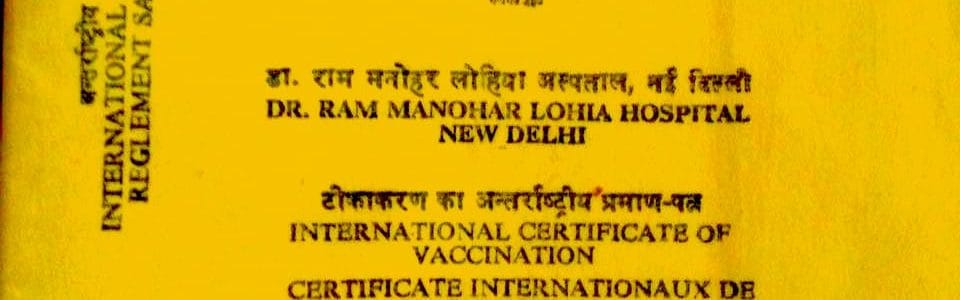
Botswana requires a valid yellow fever certificate from all foreign visitors and citizens over 1 year of age travelling from an infected area or having been in transit through infected areas (>12 hours). This rule applies to travellers from the following countries: Angola, Argentina, Benin, Bolivia, Brazil, Burkina Faso, Burundi, Cameroon, Central Africa Republic, Chad, Colombia, Costa Rica, Congo, Cote d’Ivoire, Democratic Republic of Congo, Ecuador, El Salvador, Equatorial Guinea, Ethiopia, French Guyana, Gabon, Gambia, Ghana, Guatemala, Guinea, Guinea Bissau, Kenya, Liberia, Mali, Mauritania, Honduras, Nicaragua, Nigeria, Panama, Paraguay, Peru, Rwanda, Sao Tome and Principle, Senegal, Sierra Leone, South Sudan, Sudan, Suriname, Togo, Trinidad, Uganda, and Venezuela.
There is no risk of contracting yellow fever in Botswana.
If you are travelling directly from USA or India and are not transiting through a country with the risk of yellow fever, you do not need the yellow fever vaccination certificate.
Choosing between countries?
If Botswana is still one of several options, our guide to African safari destinations compares every country we work in side by side, including malaria status, the best months to visit, typical trip lengths and starting prices.
Botswana health and vaccinations: common questions
Do I need a yellow fever certificate to enter Botswana?
Only if you are arriving from — or have transited through — a country with risk of yellow fever transmission, from age one. Botswana is not itself a risk country. Under the International Health Regulations the yellow fever certificate has been valid for life since 11 July 2016, and that applies retrospectively to certificates issued before then. No country may demand a booster as a condition of entry. The certificate becomes valid on the tenth day after vaccination.
Why is Botswana stricter about transit than its neighbours?
Because it states no minimum connection time. Most countries in the region apply a twelve-hour threshold to airport transits, which protects a traveller with a short layover. Botswana’s wording extends the requirement to transits with no duration stated at all — so a client on a Nairobi to Maun or Gaborone routing with a two-hour connection can still be caught. If your itinerary touches Nairobi, Entebbe or Addis Ababa on the way to Botswana, carry the certificate.
Is there malaria in the Okavango Delta?
Yes, seasonally. The northern half of Botswana — including the Okavango Delta, Chobe, Moremi and Linyanti — is high risk from October to May, and low risk for the rest of the year, when bite avoidance alone is usually considered sufficient. The southern half, covering the Central Kalahari, the Makgadikgadi Pans and Gaborone, is very low risk year-round. The honest phrasing is very low risk rather than malaria-free. A travel clinic will advise on prophylaxis; we do not administer or arrange it.
Is the water safe in the Delta?
Assume fresh water in the Okavango and Chobe carries schistosomiasis. CDC’s advice is worth repeating: treat local assurances that a particular stretch of water is safe with scepticism. Tsetse fly is present in the Delta and Chobe. Hippo and elephant incidents around water are a genuine risk and the reason your guide’s briefing is not a formality.
What else should I plan for?
Distances are long, camps are remote and medical evacuation takes time, which is why we treat comprehensive evacuation cover as non-negotiable on a Botswana trip rather than an optional extra. A clinic will typically cover hepatitis A, typhoid, tetanus, diphtheria, polio and MMR, and may raise rabies for mobile-camping and self-drive itineraries. With the health side settled, the interesting decision is water: the Delta’s flood peaks in the middle of the dry season, which our guide to the best time to visit Botswana explains.